

Megha Manchanda | New Delhi
Upon entering the New Delhi Railway Station from the Paharganj side, chaos greets commuters from every direction. Ongoing construction activity has led to extensive barricading, resulting in incessant honking by autorickshaws and cab drivers jostling for space. Several signboards ask passengers to redirect their entry into one of the busiest railway stations in the national capital.
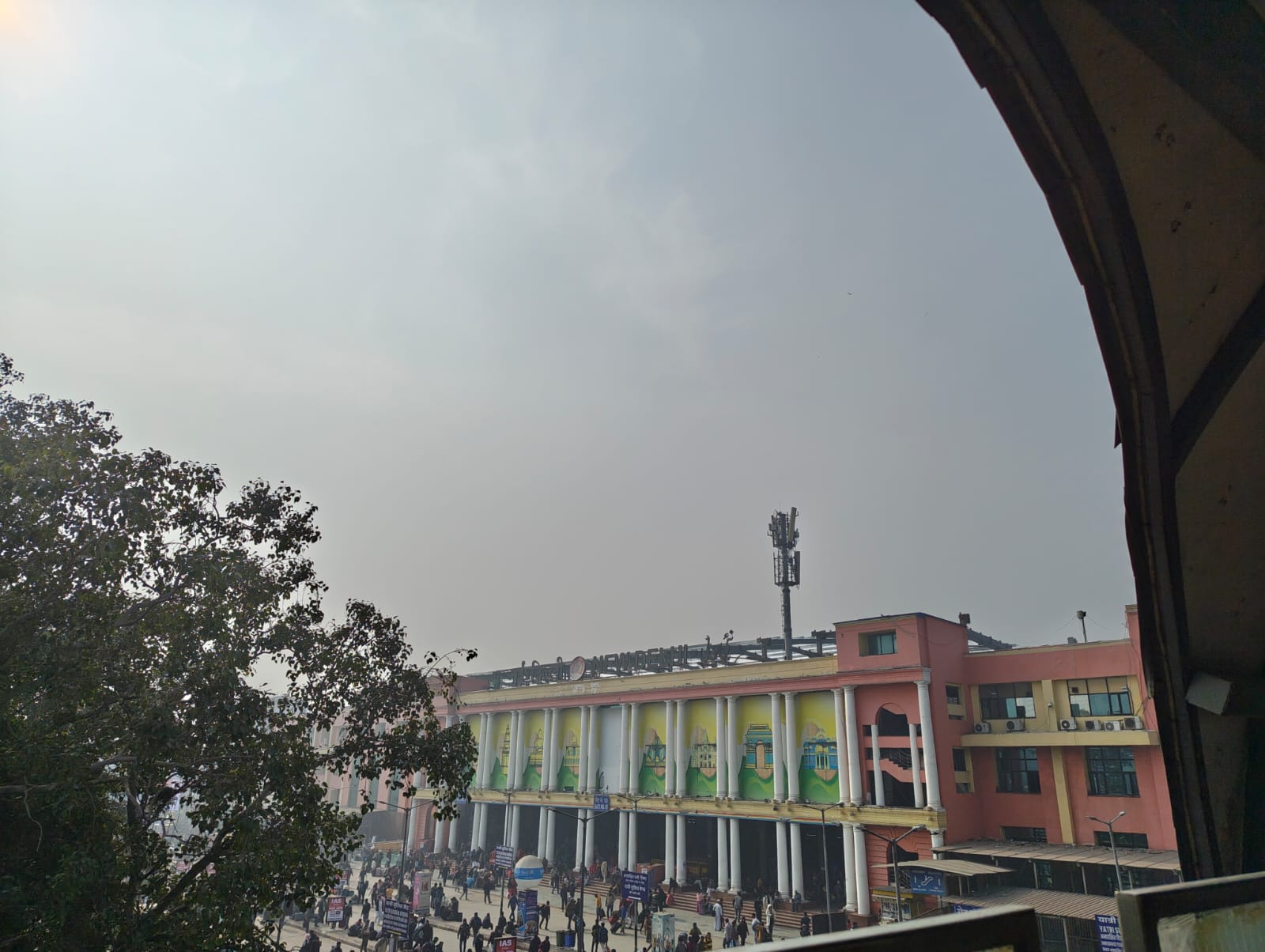
Similar diversions are visible near the Ajmeri Gate entry as well.
The Union Government announced the redevelopment of the New Delhi Railway Station in the Union Budget 2023. However, this was not the first such announcement. Over the years, multiple redevelopment plans have been proposed, revised, and shelved.
“The work started three weeks ago (in December) and is expected to take more than two years to complete,” said a labourer working at the site.
The New Delhi Railway Station redevelopment is officially a 45-month-long project that gained renewed momentum after the tragic stampede at the station in February 2025. As many as 18 people lost their lives and 15 others were injured in the incident on February 15, 2025, caused by severe overcrowding due to special trains for the Maha Kumbh Mela in Prayagraj, Uttar Pradesh.
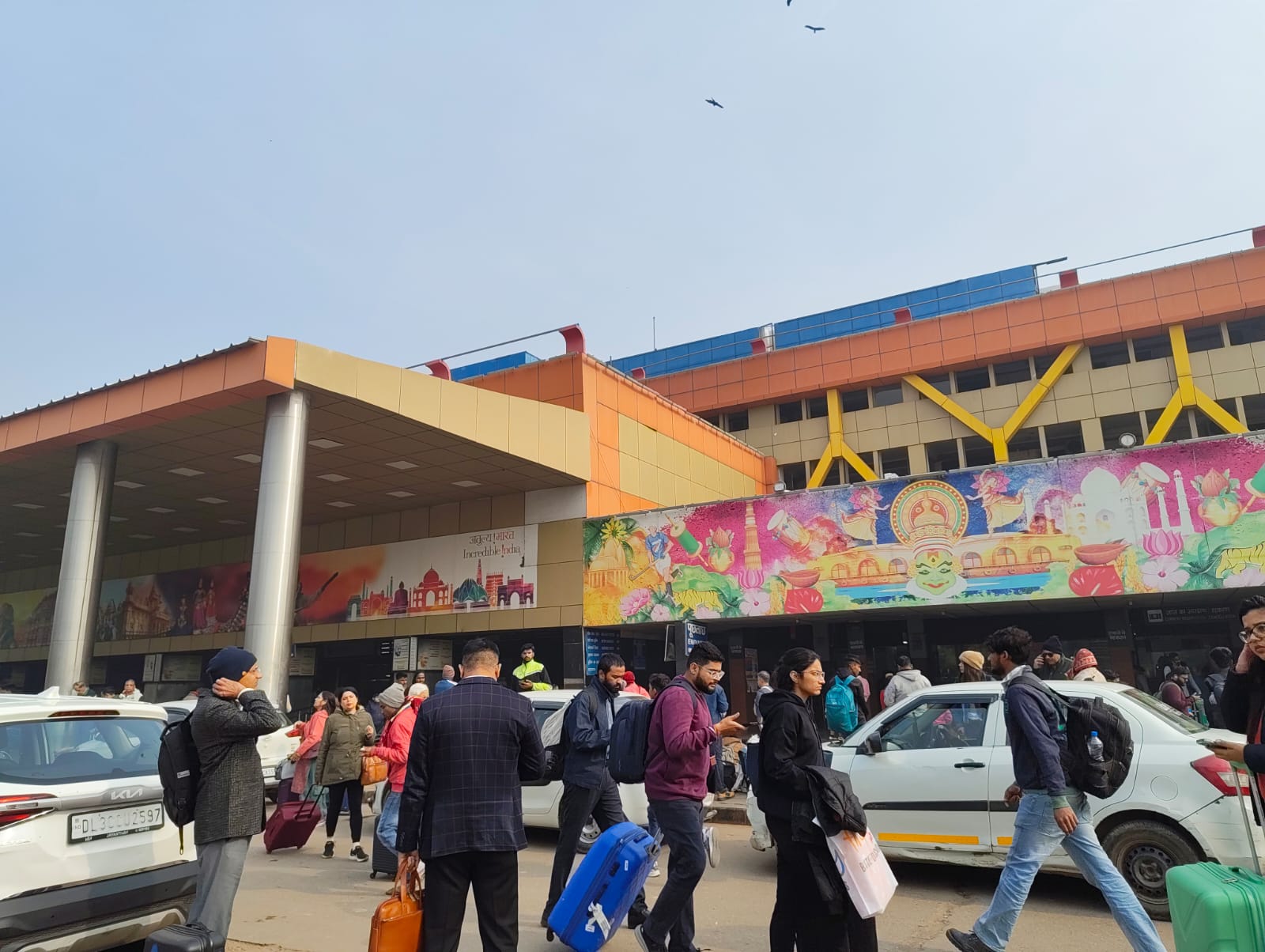
The incident is widely believed to have prompted the government to fast-track the redevelopment process. However, the on-ground reality suggests otherwise.
So far, under the redevelopment exercise, a Yatri Suvidha Kendra—a permanent holding area for passengers—has been constructed on the Ajmeri Gate side of the station. The facility has been designed by RITES (Rail India Technical and Economic Service) Limited.
The holding area houses around 20 ticket counters, equipped with proper barricading to manage overcrowding. Beyond this newly constructed section, however, the façade and core infrastructure of the station remain largely unchanged.
I collected a platform ticket from the Yatri Suvidha Kendra to gain a better understanding of the revamp work. Inside the station, the most visible changes were signs and barricades. Some signboards urge passengers not to block staircases leading to platforms, others enforce one-way movement, while a few simply display train arrival and departure information.
Entry and exit gates are heavily barricaded to manage crowd flow. Platforms have rope barricades discouraging passengers from standing too close to trains—an evident attempt to prevent stampede-like situations. Railway Protection Force (RPF) personnel are stationed on platforms at all times.
While there is extensive redirection and crowd control within the station, tangible signs of redevelopment remain minimal, largely confined to the Paharganj entry.
According to the plan, redevelopment of the New Delhi Railway Station will be carried out over 45 months. In the first phase, platforms 1 to 5 will be renovated, followed by platforms 6 to 9, then platforms 10 to 13, and finally platforms 14 to 16. The project also includes the construction of new foot-over-bridges within the station and flyovers in the surrounding areas.
This is not the first time a revamp of the New Delhi Railway Station has been proposed. In 2022, the Union Cabinet sanctioned ₹10,000 crore for the redevelopment of New Delhi, Ahmedabad, and Chhatrapati Shivaji Maharaj Terminus (CSMT) in Mumbai. However, the plan was shelved after bidders quoted prices significantly higher than the estimated cost.
Subsequently, the Railway Land Development Authority (RLDA) issued a fresh tender with a revised scope of work in July 2023. The updated plan focused on redeveloping the existing station premises and its vicinity, along with building foot-over-bridges and flyovers.
In September 2024, RLDA invited bids for the New Delhi Railway Station redevelopment at an estimated cost of ₹2,469 crore.
The New Delhi Railway Station handles nearly five lakh passengers daily—a number that rises to almost seven lakh during the festive season. Passenger volume on Indian Railways increased by six per cent in FY25, driven by a five per cent rise in reserved ticket passengers and a 6.2 per cent increase in unreserved travel.
Nearly a year after the tragic stampede at one of the country’s largest railway stations, redevelopment work has finally begun. However, progress on the ground remains extremely slow.