
By Enersider Desk | New Delhi
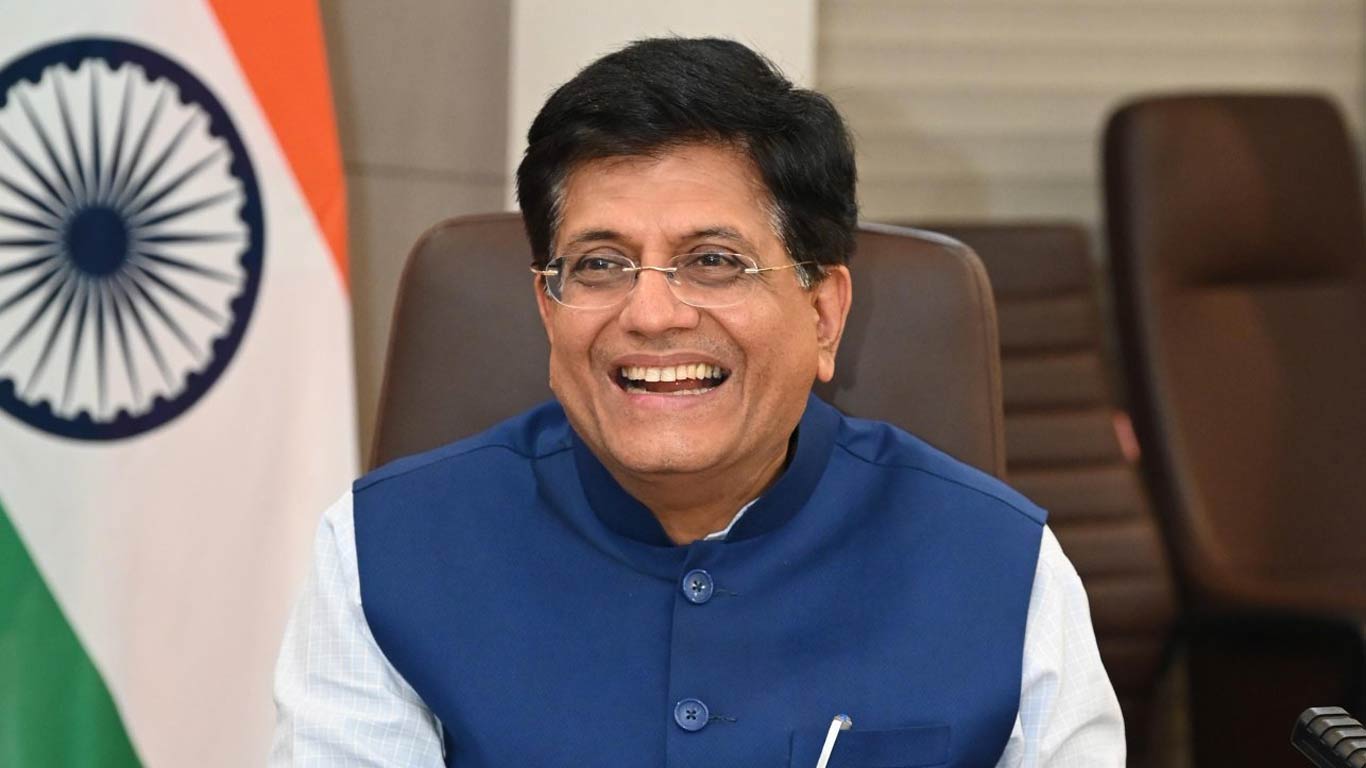
Union Minister for New and Renewable Energy Pralhad Joshi said that India’s energy transition has been deliberately designed as a tool for industrial growth, job creation and global competitiveness, particularly for emerging economies.
Addressing a high-level session on “Energy: The Great Funding Gap” at the World Economic Forum (WEF) Annual Meeting 2026 in Davos, the minister said that India has transformed its clean energy transition into a people-centric development approach while strengthening energy security and lowering costs for industry.
He noted India has already achieved 267 GW of installed non-fossil energy capacity, with renewables accounting for around 52% of the country’s total installed power capacity, ahead of earlier timelines, and added that the energy transition is being viewed not only as an environmental priority but also as a growth enabler supporting industrialisation and affordable electricity for businesses and households.
Highlighting decentralised renewable energy programmes, Joshi said the PM Surya Ghar: Muft Bijli Yojana has enabled the installation of rooftop solar systems in 2.7 million households over the last two years, with a target of 10 million households, which is expected to generate around 30 GW of power.
Under the PM-KUSUM scheme, more than 2.1 million farmers have had their irrigation pumps solarised, reducing dependence on subsidised grid electricity and enabling farmers to earn additional income by selling surplus power, with the minister noting that these initiatives are providing affordable energy while turning consumers into power producers and improving rural livelihoods.
Additionally, the minister mentioned that renewable energy has contributed to lowering electricity tariffs, citing reforms in agricultural power supply through solarisation of pumps that have reduced subsidy burdens on distribution companies, with savings translating into lower tariffs for industry and households.
On manufacturing, the minister said India has built a domestic base across the renewable energy value chain, with solar module manufacturing capacity reaching 144 GW and solar cell capacity standing at 27 GW, which is expected to expand to around 50 GW in the near future, while manufacturing of wafers and ingots is expected to commence shortly.
He added that India is scaling up wind energy, battery storage and pumped storage solutions to ensure grid stability and reliability, generating employment and strengthening industrial competitiveness.
Addressing concerns around grid reliability, the minister said India is pursuing an integrated strategy combining renewables with energy storage, pumped storage hydro and nuclear power, supported by legal and policy reforms to expand nuclear capacity and strengthen base-load power.
He said India’s experience demonstrates that energy security, affordability and sustainability can be pursued simultaneously through coherent policy design, scale and domestic manufacturing, offering lessons for other emerging economies.
Also Read: CRF flags execution gaps in flagship energy schemes ahead of Union Budget