
By Enersider Desk | New Delhi
Union Minister for Commerce and Industry Piyush Goyal delivered the keynote address at the ‘Advancing Resilience with Climate Change’ dialogue in New Delhi, highlighting India’s performance in achieving Intended Nationally Determined Contributions (INDCs), expansion of renewable energy capacity, and ongoing global economic engagements with multiple countries and regions.
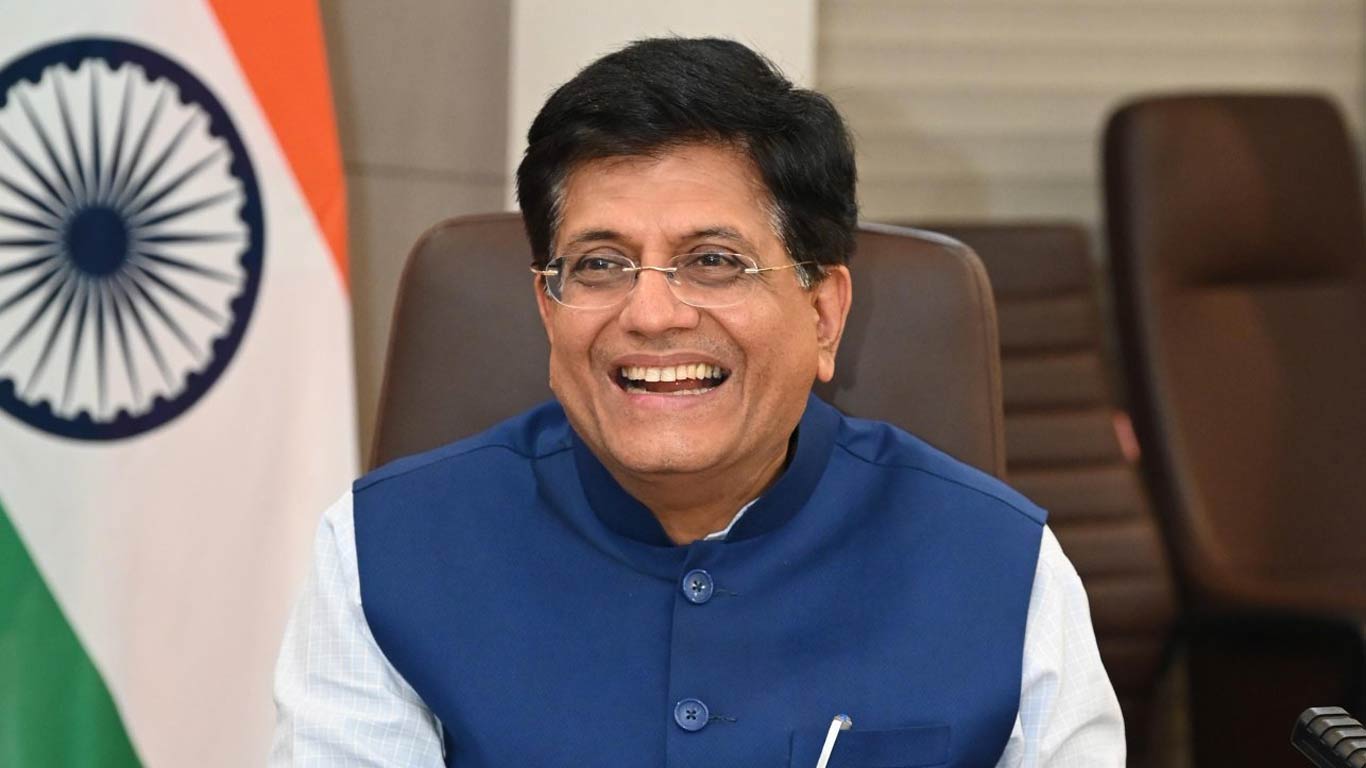
Goyal stated that India is among the best performing countries globally in achieving its INDCs, consistently ranking among the top 1–3 countries in the G20. He noted that the country met its renewable energy goals eight years ahead of schedule, with 260 gigawatts already achieved. When the union government assumed office in 2014, the earlier plan was for 20 gigawatts of solar capacity over 9–10 years, which was scaled up to 100 gigawatts and achieved within time. India has now set a target of 500 gigawatts of clean energy capacity by 2030.
Recalling India’s leadership at the Paris COP21, Goyal said that India brought together developed, developing, and less developed countries to arrive at a consensus-based outcome that allowed flexibility for nations to define their own targets.
On India’s global economic engagement, he stated that engagements are underway with another 12 countries and regions, including Peru, Chile, Canada, Qatar, Bahrain, Saudi Arabia, South Africa and its neighbouring regions, Brazil and its neighbouring regions, Russia and the Eurasian region, and Israel.
Goyal highlighted structural reforms in the power sector, particularly the creation of a unified national grid under the “One Nation, One Grid” vision. The integration of grids enabled efficient distribution, reducing costs to around Rs. 2.5–3 per unit. He also noted the extensive expansion of transmission infrastructure and the need for base load capacity to support intermittent renewable energy.
The Minister also highlighted India’s transition to LED lighting, noting that the country shifted from traditional lighting systems to LED lighting within three years.
Goyal also launched the Climate Resilience Analytics and Visualisation Intelligence System (CRAVIS) developed by the Council on Energy, Environment and Water (CEEW). CRAVIS is an AI-powered climate intelligence platform that combines over 40 years of historical data with projections up to 2070, enabling district-level analysis across 279 indicators.