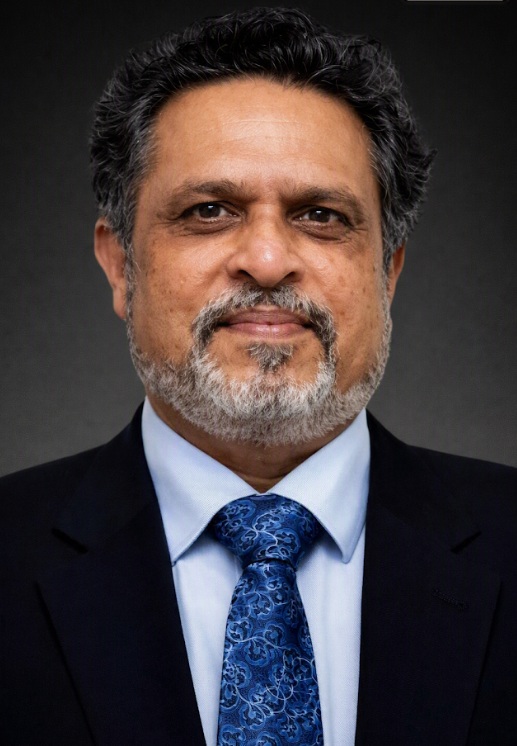
In October 2025, Vinay Krishna Srivastava took over as the Managing Director of Vadodara Gas Limited. With over 24 years of experience in the oil and gas sector, Srivastava has held senior leadership roles at GAIL (India) Limited, GAIL Gas Limited, and the Petroleum and Natural Gas Regulatory Board. His extensive experience across gas transmission, city gas distribution, and regulatory frameworks places him in a strong position to steer VGL through the next phase of growth and strengthen its role in India’s evolving energy landscape.
Enersider spoke exclusively with Srivastava about Vadodara Gas Limited’s priorities, market challenges, and its expansion plans for the coming year.
Here are edited excerpts from the conversation.
You bring over 25 years of experience in the oil and gas sector, particularly in city gas distribution infrastructure. How has this experience shaped your approach in your current role?
Interestingly, I started my career in telecom infrastructure rollout, which subsequently saw the fastest growth in tele-density—say, 131% in urban areas. Later, after joining India’s premier company, GAIL (India) Limited, I seized multiple exciting opportunities in the oil and gas sectors, including CGD, natural gas pipelines, and petroleum products pipelines at various locations across the country. However, the exposure and experience during the formative years of the sectoral regulator PNGRB truly provided me with a 360-degree understanding of the entire CGD value chain—from the policy stage to project execution and final retail consumer-level servicing. Coupled with PNGRB’s experience, my field-level business development and marketing roles during my GAIL Gas tenures in Noida and Bengaluru have also equipped me to implement concepts like arms-length transactions, handle regulatory issues, sort out developmental and marketing challenges, frame the best-possible pricing approaches, and develop a consumer satisfaction model. Needless to mention, my experience in corporate governance within GAIL’s Joint Venture Marketing group continues to aid me in managing my current role at VGL, the joint venture of GAIL Gas Limited and Vadodara Municipal Corporation.
What are some of the key challenges you encountered during your tenure at VGL?
Managing a CGD company in one of the oldest cities is definitely a challenge from project execution, operations, and maintenance perspectives. Increasing the customer base as well as profitability for the organization remains a traditional CGD challenge. While these require meticulous planning and project speed, some external factors can never be ruled out—like the major pipeline damage in Nov-25, which affected gas supply for a substantial part of the city. Our team stayed on the ground for the entire duration, minimizing disruption time in one of the best possible time frames. However, this incident provided various lessons as mitigation measures, on which we have already started working.
Geopolitical events like the ongoing Middle-East-Asia crisis have posed another difficult challenge, derailing the CGD growth story after recovery from COVID and the Russia-Ukraine episode. Such issues definitely impact growth in the industrial segment, which serves as a kind of anchor load for CGD. On the domestic PNG segment, the major challenges include outstanding payments from various consumers. The aging of the old pipeline network is also a major issue. Team VGL is working aggressively on both fronts, with positive results expected soon. Issues of fund flow existing in VGL for years have also been worked out, and it is expected that Q1 of the new financial year will be smooth in terms of fund flow.
Another challenge is the reduction in net margins due to increasing input gas costs, currency fluctuations, and the company’s reasonable endeavors to insulate retail customers from these price shocks.
How do you view competition from other states, such as Mahanagar Gas and Maharashtra Natural Gas?
- CGD is a typical business where there is no gas-to-gas competition in any authorized area. On the contrary, there is stiff competition from alternate fuels like diesel/LPG/EVs in the transport segment, LPG in the domestic, commercial, and industrial segments, and many cheaper but polluting fuels like furnace oil, naphtha, pet coke, etc., in the industrial segment.
- Price affordability for consumers—especially in the industrial and commercial segments—becomes the key factor in their choice, despite the proven superiority of PNG’s convenience and hassle-free experience. On top of that, tax benefits associated with competing fuels like LPG make competition even more price-sensitive.
- In spite of the above challenges, VGL has significantly increased its consumer base, leading to higher gas sales and revenue during the last quarter and the ongoing quarter.
- As regards nearby CGDs, the prices offered by VGL to its customers in all segments are very competitive and affordable. Customer servicing is also among the best in the industry, as evident from the recent Consumer Satisfaction Survey conducted by the PNGRB-approved agency.
What are Vadodara Gas’s key expansion plans for FY 2026–27?
The CGD business primarily requires an infrastructure roll-out strategy, with gas sales automatically following that trajectory. Based on this proven practice, VGL has chalked out an aggressive infrastructure expansion plan for FY 2026-27. This will include setting up an additional 25 CNG stations over the existing 56 stations, connecting 200 new industries and commercial units, and adding 30,000 DPNG connections over the existing 3 lakh households. It will entail laying an additional 30 km of steel pipeline, 1,000 km of MDPE pipeline, and 1 LNG station. VGL has planned capital expenditure of INR 200 Cr. during FY 2026-27, which will drive additional gas sales of around 65%.
You took action against defaulters by disconnecting their connections. Were you able to recover the dues, and to what extent?
Outstanding recovery from retail customers has always been a pain point for any CGD company, and maintaining financial discipline in this regard must be treated as a prerequisite step. VGL has also made sincere efforts to reduce the outstanding amount. Since Nov-26, we have adopted a focused approach to recovery from defaulters across all segments through a dedicated task force. While the industrial and commercial segments have achieved nearly zero outstanding balances in the last 3 months, the DPNG segment has received special attention through multiple recovery drives—conducted under police protection, with social media and newspaper coverage, and accompanied by disconnections. The results are encouraging, with substantial recoveries of up to 5% in just 3 months. Defaulters have been disconnected, and a clear message has been propagated in this regard. These drives are ongoing, complemented by other legal options like Lok Adalat and notices for final recoveries. We expect that with such continuous efforts, outstanding amounts will be brought to a reasonable level.
You signed a cooperation agreement with MECON Ltd. during India Energy Week. How will this benefit the company?
During IEW-2026, VGL signed a cooperation agreement with India’s leading engineering and project management consultant, MECON, which brings wide experience in the oil and gas sector. Areas of cooperation include consultancy services for preparing detailed feasibility reports and business plans for VGL’s various new project initiatives. It also encompasses assistance in design and engineering services for new CNG stations, LNG stations, city gate stations, and full-fledged new energy stations—where VGL will introduce multi-fuel options in due course. VGL expects that MECON’s rich and versatile experience will definitely help the company in the rapid expansion of new-age fuel stations.
Are there plans to expand the CGD network? If so, which areas have been identified for expansion?
As mentioned earlier, VGL has an ambitious plan for expanding the CGD network to provide CNG and PNG services across the entire Vadodara and Chota Udepur districts. The team is aggressively planning and executing infrastructure expansion in new areas like Savli, Manjusar, Jarod, Waghodia, Dabhoi, Karzan, and Chota Udepur—through a network of pipelines and CNG stations. A new LNG station has also been planned along the Statue of Unity route near Dabhoi. Further, exciting responses for 50 new CNG stations across 7,500 sq. m. geographical areas have been received against the EOI published by VGL on the dealership model. The company intends to expand its reach to all potential areas in the next 3-5 years.
What is the company’s outlook for FY 2026–27?
With the kind of business potential in the Vadodara GA and the expansion plan in place, there is definitely a positive future outlook for the company in FY 2026-27. Focus will be on new CNG stations along highways and PNG connections in new industrial areas in the coming year. Considering gas costs remaining within reasonable limits, VGL intends to increase gas sales to around 0.575 MMSCMD, with revenue projections of ~INR 1,000 Cr. and PAT of ~INR 55 Cr. in FY 2026-27.