

By ANI | New Delhi | June 1 2026
The Central Government has notified revised export levies on petrol, diesel and aviation turbine fuel for the next fortnight beginning June 1, citing the need to ensure domestic availability of petroleum products amid the West Asia crisis.
The rates will be lower for petrol, but will remain high for diesel and ATF, while domestic excise duty rates stay unchanged.
“Export levies [Special Additional Excise Duty (SAED)/Road and Infrastructure Cess (RIC)] on the exports of petrol, diesel and aviation turbine fuel (ATF) were introduced with effect from 27th March, 2026 so as to ensure domestic availability of petroleum products by disincentivising exports in the backdrop of the West Asia crises,” the notification read.
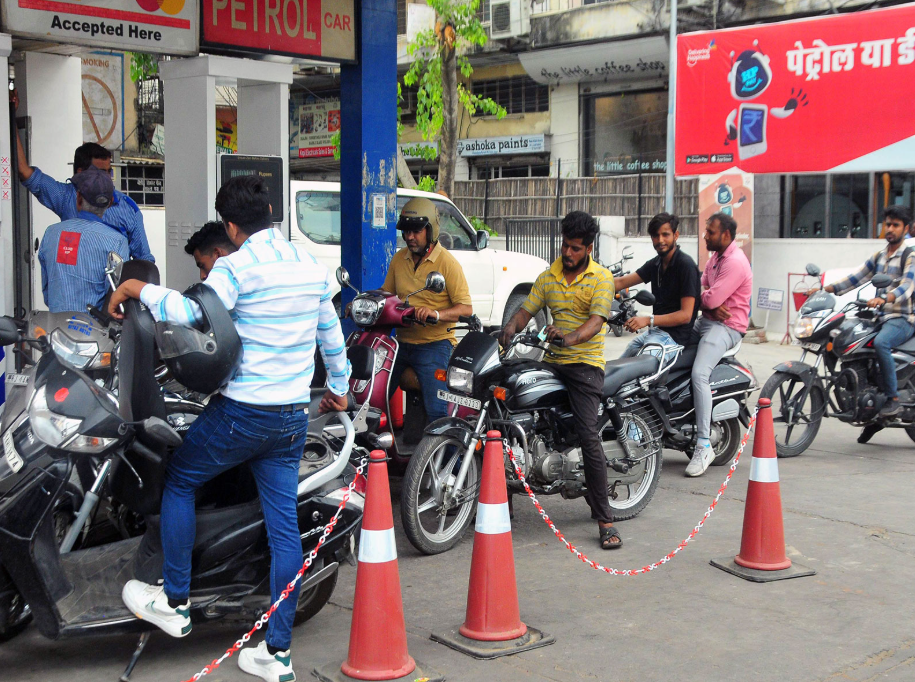
Image Credit: ANI
The levies are revised on a fortnightly basis, with the last revision undertaken with effect from 16 May 2026. “The rates are prescribed based on the average international prices of crude oil, petrol, diesel and ATF prevailing during the period since the last review,” it further added.
For the fortnight starting June 1, the Centre has set the duty at Rs 1.5 per litre on exports of petrol, comprising SAED of Rs 1.5 and RIC of Nil. For diesel, the rate will be Rs 13.5 per litre, with SAED at Rs 13.5 and RIC at Nil. For ATF, the levy will be Rs 9.5 per litre under SAED only.
“The rates for the next fortnight beginning 1st June, 2026, have been notified by the Central Government today. Consequently, the rate of duty will be Rs 1.5 per litre (SAED- Rs 1.5; RIC- Nil) on exports of petrol, Rs 13.5 per litre (SAED – Rs 13.5; RIC – Nil) on exports of diesel and Rs 9.5 per litre (SAED only) on exports of ATF,” the notification said.
The sharp reduction in petrol export levy from previous levels reflects softening international gasoline prices relative to crude, while diesel and ATF continue to attract higher duties given elevated global prices and demand pressures linked to the geopolitical situation. The measure is aimed at discouraging exports of fuel at a time when India is balancing energy security with inflation risks.
The government clarified that there will be no impact on domestic consumers from the change.
“There is no change in the existing excise duty rates on petrol and diesel cleared for domestic consumption,” it said.
Introduced on 27 March 2026, the SAED/RIC mechanism links export duties to global price movements to keep fuel within the country when international rates spike. With West Asia tensions keeping crude and product markets volatile, the fortnightly review system allows New Delhi to adjust disincentives quickly. The next revision will again be based on average international prices of crude oil, petrol, diesel and ATF since the last review.
Also Read: Myanmar President Visits NTPC NETRA; Explores India’s Advanced Clean Energy Technologies