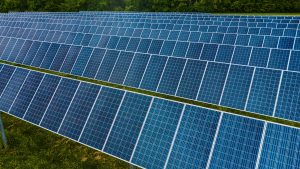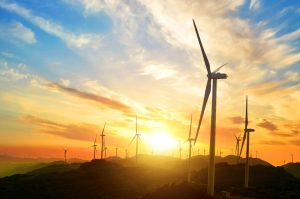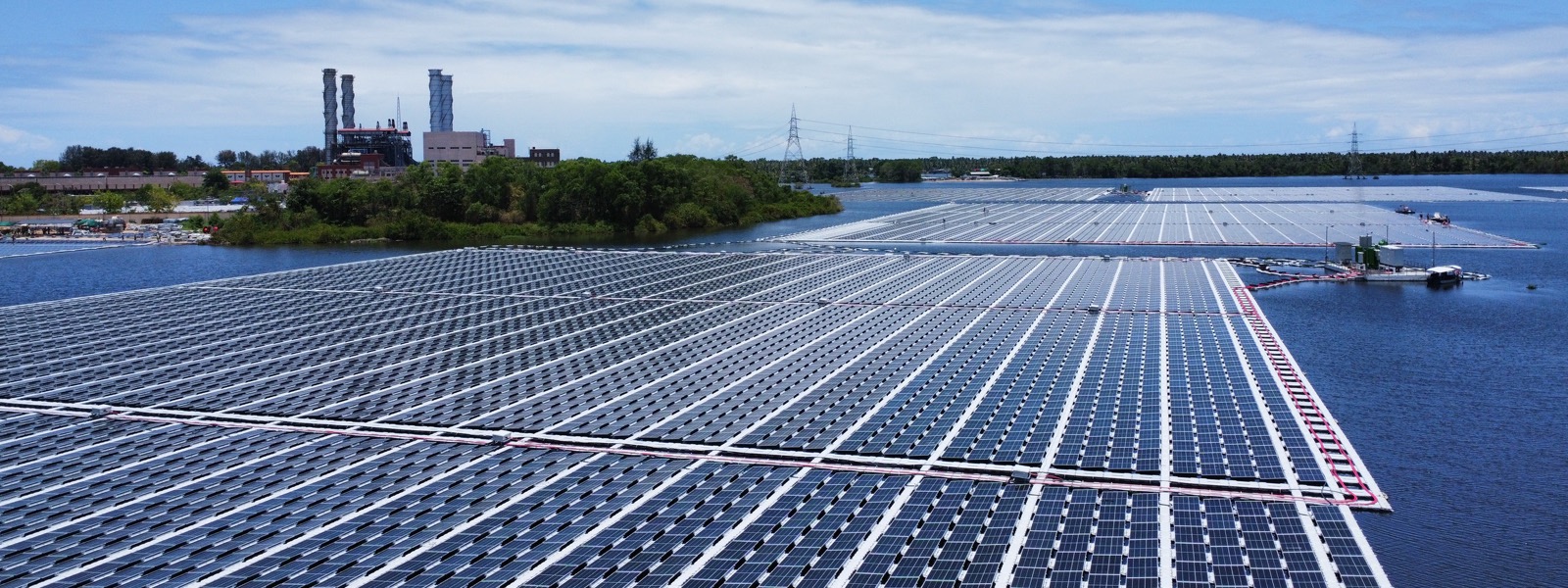
 In a world grappling with depleting reservoirs of fossil fuel and living under the imminent threat of a global scale war fighting over those very finite resources, a shift towards renewable sources of energy is no longer an alternative; it is a necessity. However, the shift towards green energy is a rocky road and comes with its own set of challenges. Solar and Wind power are hugely weather dependent, hence unreliable and unpredictable. Other sources such as hydrogen and nuclear power are capital intensive and cost ineffective. E-Mobility demands extensive infrastructure. Add to that efficient storage and grid stability remain a concern. These factors make the shift significantly harder. But now, renewable energy has a new ally: AI. Artificial Intelligence (AI), once seen as a futuristic add-on, has now become a practical tool helping India move closer to its clean energy ambitions.
India’s renewable energy journey is massive in scale and ambition. With a target of 500 GW of non-fossil fuel capacity by 2030, the challenge is no longer just about building clean energy—it is about managing it efficiently.
Over the last five years, government strategy and independent research have paired policy ambition with practical pilots that show how machine learning and predictive analytics close the gap between variable renewables and steady demand. The National Strategy for Artificial Intelligence has explicitly identified energy as a core domain where AI can improve forecasting, dispatch, and asset management — turning uncertainty into advantage.
Studies by institutions such as NITI Aayog and TERI highlight how AI is helping utilities forecast electricity demand more accurately, predict weather-related generation patterns, and prevent breakdowns before they happen. Instead of reacting to problems after they occur, energy companies are learning to anticipate them. This shift alone is saving time, money, and emissions.
Think tanks like the Council on Energy, Environment and Water (CEEW) point out other important impacts: from identifying ideal locations for solar plants to improving the efficiency of wind turbines, AI tools are reducing waste and speeding up deployment. For a country where cost and scale matter deeply, these efficiencies are crucial.
In Gujarat tests, AI tools have made the grid smarter and cheaper. Hitachi Energy India has been using Nostradamus AI for forecasting wind and solar generation, predicting market pricing, and anticipating energy load, helping grid operators plan resources more efficiently. Similarly, Adani Green Energy also uses AI-based forecasting tools to predict solar and wind generation with greater accuracy. Maharashtra State Electricity Distribution Co. Ltd. (MahaVitaran) has effectively adopted an AI-based Digital Twin model of the grid to boost solar and renewable distribution efficiency, improving operational planning and service delivery across distribution networks. Tata Power in Bengaluru used AI to save nearly 18% on batteries. And at Goldi Solar’s massive new factory—opened by the Minister for New and Renewable Energy, Pralhad Joshi—AI spots tiny flaws in panels at high speed, helping India manufacture and sell clean energy technology worldwide.
Yet, the story is not without its challenges. AI systems themselves consume energy and depend on high-quality data. Researchers caution that digital tools must be designed responsibly, with cybersecurity, transparency, and energy efficiency in mind. The goal is not to replace one problem with another, but to ensure that technology genuinely lowers India’s carbon footprint.
As India accelerates toward a cleaner future, AI is no longer working in the background. It is learning, adapting, and guiding the country through one of the most important transitions of our time—one smart decision at a time.
REFERENCES –
https://teriin.org/sites/default/files/2024-02/Power_Sector_2050_Report.pdf