
By PTI | New Delhi
The Centre has issued operational guidelines for the deployment of about 72,300 public EV charging stations across the country with a Rs 2,000-crore outlay under the Rs 10,900 crore PM E-DRIVE scheme.

The norms recommend a tiered subsidy structure to be followed to support the installation of EV charging infrastructure across different locations.
Government premises such as offices, residential complexes, hospitals, and educational institutions will receive 100 per cent subsidy on both upstream infrastructure and EV charging equipment, provided the chargers offer free public access.
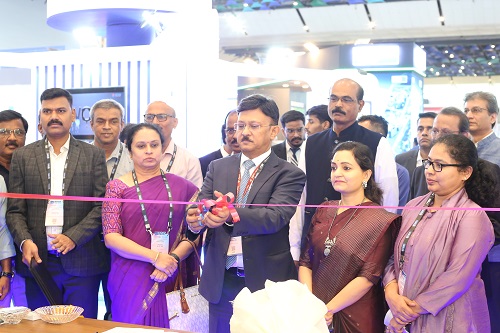
Earlier this week, The Indian Charge Point Operators Association (ICPOA), the first and only industry body dedicated exclusively to EV charging infrastructure, hosted its flagship annual event – Bharat EV Charging Conclave 2025, at The Lalit, New Delhi. Bringing together Charge Point Operators (CPOs), Charger Equipment Manufacturers (OEMs), Electric Mobility Service Providers (EMSPs), policymakers, utilities, OEMs, and technology experts, ICPOA led robust sector-wide deliberation on scaling reliable, consumer-centric EV charging infrastructure for India’s electrification goals.
The Union Government has set a target of 30% EV penetration by 2030. Additionally, the vision of Viksit Bharat by 2047 necessitates the creation of an R&D landscape that can enable the creation of a self-reliant domestic EV ecosystem.
Additionally, PSA Office formed a Core Group on e-Mobility (CGeM), a panel of experts from Government, Academia, and industries, initially on August 12, 2022 under the chairmanship of Ajay K. Sood, PSA to the Union Government. CGeM, has prepared several Technical Roadmap (TRM), outlines the imperative and methodologies for developing ZET pilots, advancing product innovations, conducting field research, and identifying regulatory frameworks, according to an official statement.
In this regard, Indian automotive industry will need up to 2 lakh skilled people by 2030 to meet the government’s vision of 30 per cent electric vehicle adoption, the Society of Indian Automobile Manufacturers said. A total talent investment of Rs 13,552 crore is expected for hiring and training the workforce.
“As we look ahead, one of the major constraints the auto industry will face is the dearth of skilled electric vehicle capable manpower,” Society of Indian Automobile Manufacturers (SIAM) President Vinod Aggarwal said while addressing a workshop on empowering EV-ready workforce in the Indian auto industry.
Image Source: Switch Delhi
Also read: https://enersider.com/wp-admin/post.php?post=1097&action=edit