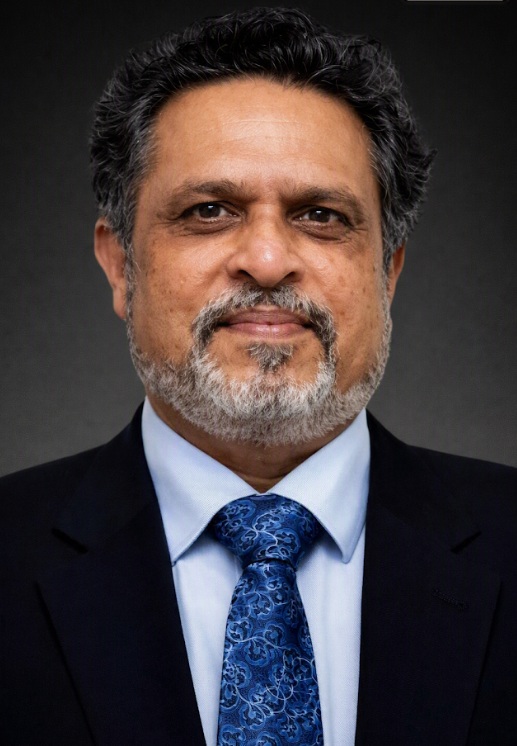

 Erik Solheim, former Executive Director of the United Nations Environment Programme and Norway’s Minister for Environment and International Development, has long been at the forefront of global environmental diplomacy. Currently serving as the Global Ambassador for the Global Solar Council, Solheim brings decades of experience in driving sustainability initiatives, renewable energy adoption, and international climate cooperation.
In a candid conversation with Enersider, Solheim reflected on the mounting climate crises and underscored the urgent need for nations to step up, break silos, and collaborate on ambitious, collective solutions. His insights highlight the transformative potential of clean energy, technology, and global partnerships in creating a sustainable future for all.
- You have emphasised the UN’s critical role as a global platform for environmental cooperation. What specific reforms would you prioritise to make the UN more effective in addressing climate change?
The UN is clearly the one institution the world cannot do without—because we need a platform where countries can work together. Yet today, the UN is performing far below its potential.
Nobody expects the UN to offer real solutions for peace in Ukraine, Gaza, Sudan, or anywhere else. In my view, three deep reforms are essential. First—and most obvious—India must be given a permanent seat on the Security Council, and the entire structure needs to be overhauled to reflect the realities of the 21st century, not the world of 1945. Africa and other underrepresented regions must also have a voice.
Second, the culture of excessive bureaucracy must change—less focus on internal processes, more on delivering results for people on the ground.
And third, the UN needs bold new leadership. The current leadership has proven utterly ineffective, and the world deserves better.
- Given the sluggish pace of international negotiations, do you think regional alliances like the EU or ASEAN could take the lead in climate action while global consensus falls behind?
Absolutely. I believe regional alliances like the African Union, ASEAN, and the European Union have a critical role to play—but so do individual nation-states. Ultimately, it’s the decisions made in Beijing, in Delhi, and in Brussels, on behalf of the European Union, that are shaping the world’s trajectory. Today, it’s the top political leaders and the most influential business leaders who are driving real change. A decade ago, after the failed climate talks in Copenhagen, we were desperate. No one imagined that the cost of solar energy would fall by 90%. Yet today, renewable energy is the cheapest form of energy anywhere in the world.
- You noted that American businesses are likely to keep advancing green objectives regardless of political leadership. How crucial is the private sector in achieving global climate goals, and what more can governments do to support it?
In most countries, businesses are moving ahead of political leaders—and nowhere is this clearer than in the United States. Take electric cars, for instance: no one who’s switched to one wants to return to petrol. They’re more high-tech, offer greater autonomous driving capabilities, and are far easier to heat in winter or cool in summer. The U.S. private sector is eager to push forward—otherwise, it would simply be handing the advantage to China, India, and others. Last year, 85% of all new energy added to the U.S. grid came from solar or batteries. You can slow this transition down, but you cannot reverse it.
- As someone who has played a key role in rainforest conservation, what do you see as the most urgent threats to global forests today, and how can international partnerships better safeguard these critical ecosystems?
The two largest rainforest nations—Brazil and Indonesia—are now proving that deforestation can be dramatically reduced. Indonesia has brought it down to zero, and in Brazil, under President Lula da Silva, it has fallen sharply. Both countries have shown that it’s possible to build thriving businesses in the rainforest without destroying it. In Indonesia, the government and major companies alike understand that industries like palm oil, paper, and pulp don’t need to expand into pristine forests—they can operate in already degraded areas. On top of that, sectors like tourism offer even more opportunities. The real challenge lies in providing livelihoods for the 20 million people living in Brazil’s Amazon without sacrificing the forests themselves.
- Are there international companies or consultants specifically focused on development in this area?
A key source of funding for initiatives like rainforest conservation could be the global carbon market. Major tech companies like Microsoft and Google can also play a big role by sourcing solar energy for their data and AI centers.
- How do you see the role of rapidly growing economies like India and Indonesia in global climate efforts, and what kinds of partnerships or support do they need from developed nations?
India and Indonesia have their own agency and are fully capable of taking action without outside support. However, they can benefit from partnerships by developing carbon markets. Development assistance is often overstated as a source of finance—ultimately, most funding comes from governments, private banks, insurance companies, and private firms investing in green technologies.
- With wars and geopolitical conflicts dominating global attention, how can environmental priorities stay on the agenda and avoid being pushed aside in international policymaking?
That’s yet another reason why we must work to end these wars. There are multiple challenges we need to tackle at the same time—climate change, poverty alleviation, and pandemic prevention. The only way forward is through cooperation. Asia, being largely peaceful, has a major advantage and is emerging as the world’s key growth centre.
- What role can climate action play in post-conflict reconstruction, for instance in countries like Ukraine or Sudan? Can environmental restoration help support peacebuilding?
I believe climate and conflict are deeply interconnected. Climate change doesn’t automatically cause wars, but it acts as a powerful amplifier of tensions. When water sources are destroyed, natural disasters strike, or large populations are displaced, the risk of conflict rises dramatically.
And the reverse is also true—wars typically cause massive environmental destruction that must be repaired afterward. We should see conflict and environmental damage as closely linked challenges that need to be addressed together.
- From your perspective, what are the most promising areas in renewable energy that can be scaled quickly to achieve both development and climate goals?
I believe without a doubt that solar energy will be the main energy source of the 21st century, with all other forms complementing it. Hydropower and pumped storage will serve as batteries for solar, while wind, bioenergy, and even nuclear will see significant growth. We will witness massive solar projects—I’ve visited the world’s largest in Xinjiang, China—and India has the potential to develop similar projects in Gujarat and Rajasthan.
- How do you propose engaging younger generations, especially in the Global South, in climate leadership and environmental stewardship beyond just protest movements?
I believe we need to shift the narrative because the environmental movement often focuses too heavily on the negative, trying to scare people into action. Instead, we should highlight the immense opportunities for a better life—healthier living, cleaner cities, and happier communities—through going green.
This is also the message of Indian Prime Minister Narendra Modi, whom I listen to often. He rarely talks about emissions, the dangers of climate change like droughts or floods, or even the Global Climate Conferences. Instead, his focus is on how India can merge ecology and economy—lifting people out of poverty, creating livelihoods, building better cities—and achieving all this through solar, wind, electric vehicles, and other transformative technologies.