
By Manish Jalui | Mumbai | 29 July 2026
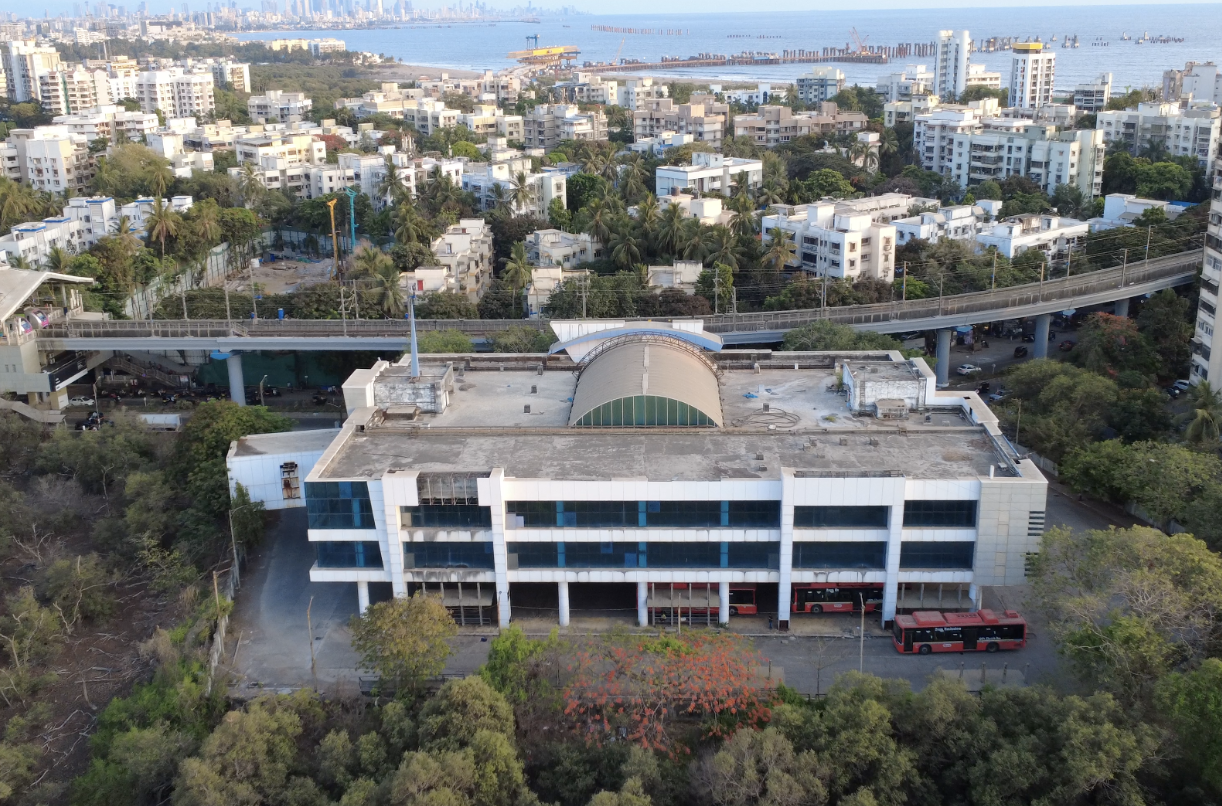
When a BEST electric bus crashed in Mumbai’s Kurla neighbourhood late last year, killing several people and injuring dozens more, the tragedy sparked a familiar debate. Were electric buses themselves unsafe, or had the city moved faster than its ability to prepare drivers, infrastructure and institutions for a technology that behaves very differently from conventional buses?
The questions have only grown louder as Mumbai rapidly expands one of India’s largest electric bus fleets. The city has committed thousands of electric buses over the coming years as part of its effort to reduce emissions and modernise public transport. Yet behind the promise of cleaner mobility lies another transition taking place quietly inside bus depots, where drivers accustomed to manual CNG buses are learning to operate powerful automatic electric vehicles on some of the country’s most congested roads.
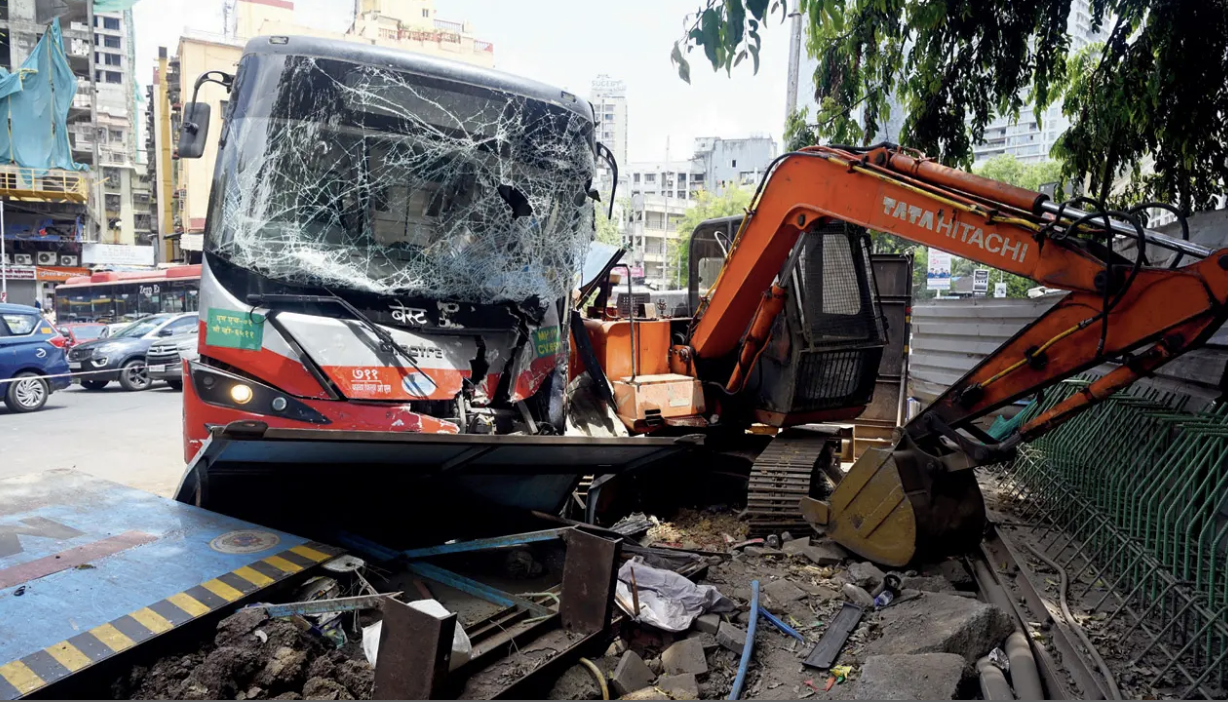
The challenge is no longer whether Indian cities should electrify public transport. It is whether they can do so safely.
For transport experts, the transition is driven by an urgent environmental need. Heavy-duty vehicles contribute disproportionately to urban air pollution, and electrifying buses offers one of the quickest ways to reduce emissions while improving public transport.
But replacing diesel and CNG buses with battery-powered vehicles is far more than a change of fuel.
“It is not just about buying buses,” says Amit Bhatt, India Managing Director at the International Council on Clean Transportation (ICCT). Public transport already struggles with low fare recovery, fragmented planning and chronic underinvestment, he explains. Electric buses add another layer of complexity – charging infrastructure, higher upfront costs, delayed payments to operators and a completely different driving experience.
Unlike conventional buses, electric buses deliver instant torque, accelerate rapidly and rely on regenerative braking instead of the familiar clutch-and-gear system. Drivers trained over decades on manual vehicles must adapt to an entirely different machine.
That adaptation is unfolding every day inside Mumbai.
Rajaram Yadav has spent years behind the wheel, first driving private buses before joining operations serving BEST. His biggest concern is not the technology itself but the condition in which drivers operate.
“We drive eight hours, and often work longer through overtime,” he says. “The salary comes on time, but the workload is heavy.”
Yadav currently drives CNG buses but has observed electric buses closely. Unlike manual buses that require constant clutch and gear operation, electric buses demand a calmer approach.
“These buses have to be driven with a cool mind,” he says. “You cannot drive them in anger or in a hurry.”
He believes training is the deciding factor.
“If someone shifts from CNG to electric without proper training, they will not understand how the vehicle behaves,” he explains. “Everything has to be learnt – braking, controls and how the vehicle responds.”
Yadav dismisses the idea that electric buses are inherently dangerous. In his view, many accidents stem from human error.
“In one case, the driver pressed the accelerator instead of the brake,” he says. “That mistake became a tragedy.”
Yet he also believes long hours, low salaries and the need to take up secondary jobs leave many contract drivers mentally exhausted before they even begin their shift.
With salaries often between Rs 20,000 and Rs 25,000 a month, many drivers struggle to support families in one of India’s most expensive cities.
“When one person has to feed four people, you end up taking another job after your shift,” he says.
Another contract driver, Dinesh Patil, echoes many of the same concerns.
Driving CNG buses for the past three years, Patil says contract drivers face lower wages, fewer benefits and little certainty compared with permanent BEST employees.
“Work is hard, but the salary is very low,” he says.
He received 21 days of induction training before joining duty and believes electric buses require even more practical instruction.
“Many new drivers come from driving auto-rickshaws or smaller vehicles,” he says. “Electric buses respond differently. If you don’t understand them properly, mistakes happen.”
Patil believes electric buses are physically easier to operate because there is no clutch or gear shifting, reducing fatigue over long shifts. But the simplicity of driving can also be deceptive.
“They look easier,” he says. “But because they are automatic and respond quickly, drivers need more training.”
His biggest demand, however, remains permanent employment and better wages.
BEST insiders say these concerns reflect deeper structural changes taking place across Mumbai’s public transport system.
Sunil Gannacharya, a long-time member of the BEST committee and former leader of the BEST Employees’ Union, has watched the organisation evolve over two decades.
At its peak, he says, BEST operated nearly 5,000 buses carrying around thirty lakh passengers every day. Today, the operational fleet has shrunk dramatically while demand continues to outpace supply.
Much of the new fleet operates under the “wet lease” model, where private contractors own and maintain buses while BEST pays operators on a per-kilometre basis. Under this arrangement, drivers are employed by contractors rather than BEST.
“The salaries and facilities available to contract drivers are not the same as permanent employees,” Gannacharya says.
He believes this difference directly affects morale, fatigue and eventually safety.
According to him, Mumbai’s operating conditions make the transition especially difficult. The city’s roads are narrow, infrastructure projects constantly alter traffic patterns and the new 12-metre electric buses are significantly longer than many buses BEST previously operated.
Frequent stops every kilometre, automatic doors opening and closing hundreds of times a day and dense mixed traffic create operating conditions very different from those for which many electric buses were originally designed.
He believes every driver should receive at least one month of dedicated training before entering service.
“You cannot simply hand over a new technology and expect people to learn on the road,” he says.
BEST officials say they have already begun strengthening training systems.
Assistant General Manager Ramesh Madhavi says the undertaking has expanded induction programmes for drivers operating electric buses, particularly after recent fatal accidents.
“Electric buses are different from conventional buses because of their instant acceleration and regenerative braking,” Madhavi says. “Drivers need to understand the vehicle before they begin carrying passengers.”
BEST now uses dedicated electric buses fitted with dual controls for practical instruction, allowing trainers to intervene if necessary during on-road sessions.
Maravi says refresher courses are also being updated regularly based on operational experience, while the undertaking continues expanding charging infrastructure across its depots.
Mumbai has already placed orders for nearly 4,750 electric buses, although deliveries have slowed because of manufacturing capacity and battery supply constraints.
For BEST Chairperson Trushna Vishwasrao, those delays do not diminish the importance of electrification.“Electric buses are the future of Mumbai,” she says. “They reduce pollution, improve passenger comfort and are essential if the city wants cleaner public transport.”
However, she acknowledges that expanding the fleet must be matched by stronger safety measures.
“After the recent accidents, we have insisted that operators provide proper driver training before buses enter service,” Vishwasrao says. “No one’s life is cheap.”
She says BEST has strengthened contractual conditions requiring private operators to train drivers through the undertaking’s own facilities before they begin operating city routes.
Vishwasrao also argues that Mumbai requires far greater public investment if it is to meet growing demand.
“The city needs many more buses than it has today,” she says. “Public transport cannot be judged only on profit. It is a public service.”
Experts say Mumbai’s experience reflects challenges facing cities across India.
Bhatt believes electrification remains the right direction but says technology alone cannot deliver safer transport.
“Many countries have dedicated schools for bus drivers,” he says. “In India, drivers often learn while working. That approach has to change.”
He argues that investment in training, better maintenance systems, stable financing and improved driver welfare are just as important as purchasing new buses.
For drivers like Yadav and Patil, the transition offers genuine advantages. Electric buses are quieter, smoother and less physically demanding than older vehicles. But they say those benefits will only be realised if drivers are given the time, training and financial security needed to adapt.
Mumbai’s electric bus journey is therefore about far more than replacing one type of vehicle with another. It is about modernising the systems that support public transport-from workforce development and infrastructure to financing and governance.
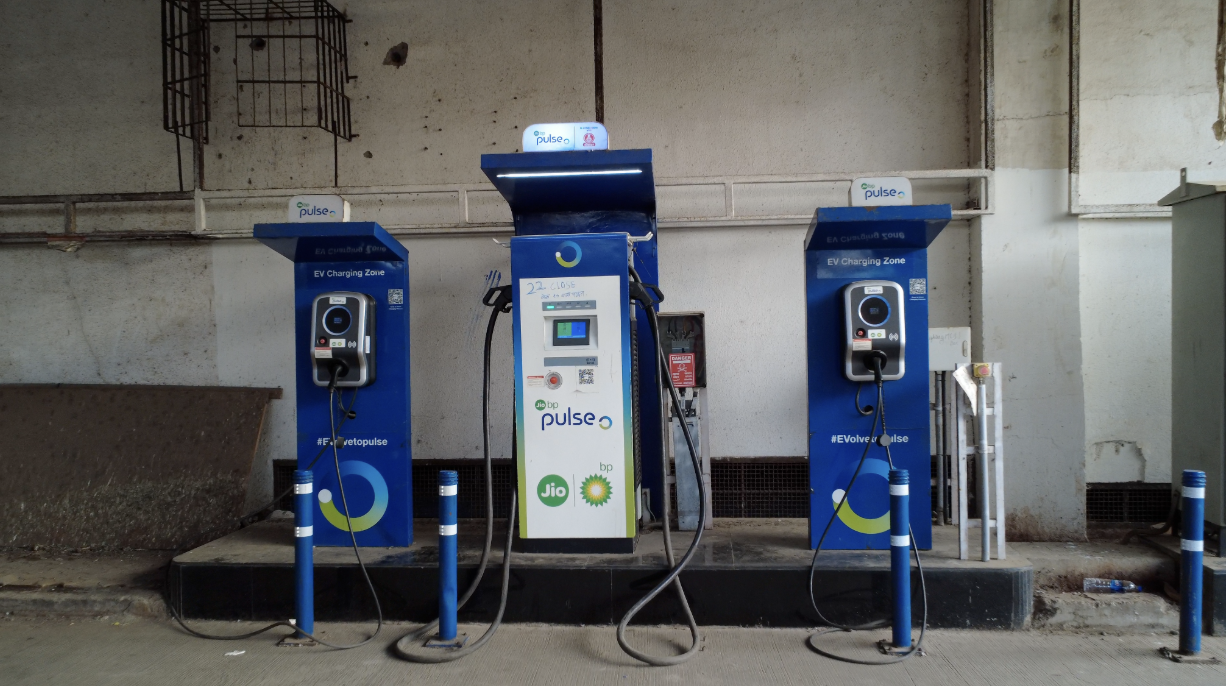
If the city succeeds, it could offer a blueprint for India’s wider shift to cleaner mobility. If it fails, the lessons from Kurla and Bhandup will serve as a reminder that the success of the electric bus revolution depends not only on batteries and charging stations, but also on the people behind the wheel.
– Manish Jalui is an Independent Journalist.
(This story is supported by the Just Transition Research Center (JTRC) Fellowship offered jointly by IIT Kanpur, Climate Trends, and supported by the Earth Journalism Network).