

By ANI | New Delhi | 8 June 2026
India’s solar industry is entering a structural transformation phase as the mandatory use of domestically manufactured solar cells under ALMM List-II comes into effect. With this transformation, the solar power market will likely move towards oligopoly, says JM Financial.
With over 120 manufacturers, the Indian solar industry’s collective installed module capacity exceeds 210GW, of which 173GW is enlisted under the ALMM List I. These manufacturers can be further classified into three categories: potentially large integrated players, technologically strong domestic players, and policy-dependent assemblers who largely depend on import duties and ALMM protection. Meanwhile, India’s “solar cell manufacturing capacity lags at 30GW across 13 enlisted players, expected to touch 60-70GW by FY28E (10-15 players),” the report added.
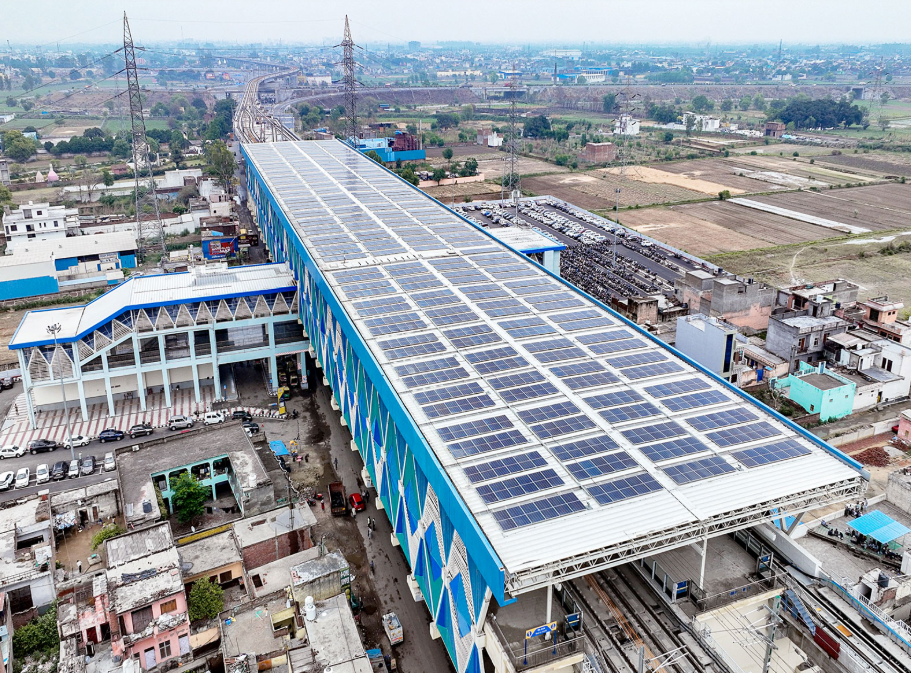
Image Credit: ANI
On the other hand, “the ALMM List-III, which proposes to extend the domestic mandate to ingots and wafers, is currently under consultation with a proposed implementation timeline of Jun’28,” the report said.
Effective June 1, 2026, all solar projects commissioned under Net-Metering and Open Access are required to use solar PV modules from ALMM List-I and solar PV cells from ALMM List-II.
Noting the “government implemented the ALMM List-II without a blanket deferral despite significant industry pressure,” JM Financial expects that “the ALMM List-III will be introduced within the stipulated timeline of Jun’28.”
In FY26, India installed 44.6GW of solar power capacity — including 15 GW from the commercial and industrial (C&I) segment and captive projects, up from 10 GW in FY25.
By the end of March 2026, cumulative installed solar open-access capacity reached 32.9 GW. As per CEA, total RE capacity under construction at end-Mar’26 is 138GW, comprising 90GW solar, 29GW wind and 19GW hybrid. As per JM Financial, “10-15GW of solar open access capacity under construction may be eligible for relaxation and will have insignificant impact on opportunities for cell-module integrated players.”
As the policy focus shifts toward capital- and capability-driven integration–with solar cells from June 2026 and ingots/wafers likely by June 2028 – “the industry will inevitably witness consolidation, exit of weaker manufacturers and a gradual move towards an oligopoly,” said JM Financial.
Also Read: Evonith Steel acquires 85 MW power plant in Maharashtra, strengthening energy security