

By Enersider Desk | New Delhi
In a historic milestone for its renewable energy ambitions, India has officially overtaken Japan to become the world’s third-largest producer of solar power. According to the latest data from the International Renewable Energy Agency (IRENA), India generated 108,494 GWh of solar energy in the past year, edging out Japan’s 96,459 GWh.
This achievement marks a stunning transformation for a nation whose solar landscape was, just a decade ago, in its infancy with only a few scattered installations. As of July 2025, India’s cumulative solar capacity has reached 119.02 GW. This robust infrastructure comprises 90.09 GW from ground-mounted plants, 19.88 GW from grid-connected rooftop systems, 3.06 GW from hybrid projects, and 5.09 GW from off-grid installations, showcasing a multi-faceted approach to expansion.
The progress is a direct result of strategic government initiatives and a concerted push towards its COP26 pledge of achieving 500 GW of non-fossil fuel electricity capacity by 2030. This target is a cornerstone of India’s clean energy transition and its broader climate strategy, which includes a commitment to net-zero emissions by 2070.
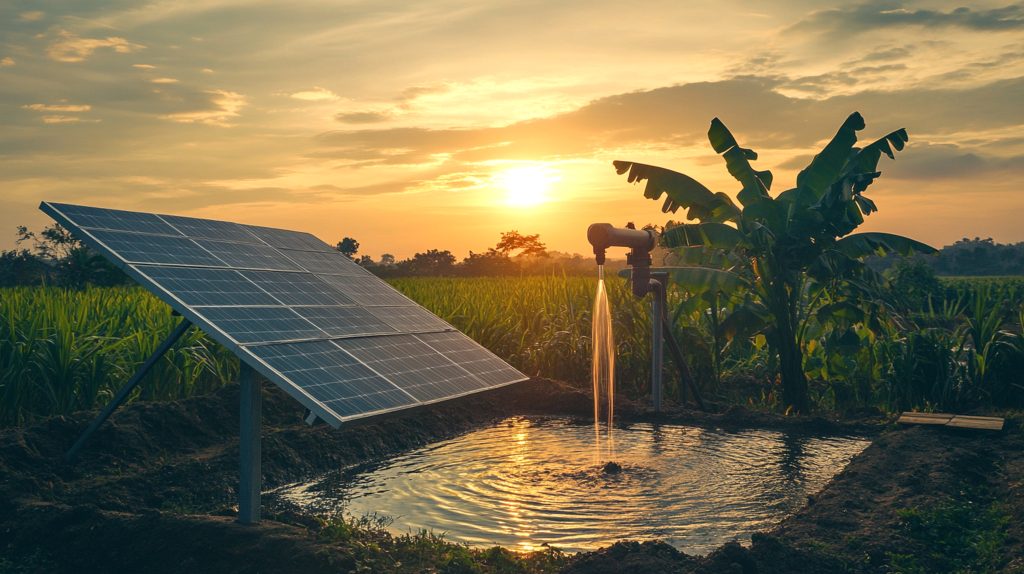
Key government schemes have been instrumental in this growth. The PM Surya Ghar: Muft Bijli Yojana, with an outlay of ₹75,021 crore, aims to provide free monthly electricity to one crore households through rooftop solar. The PM-KUSUM scheme empowers farmers by subsidizing the transition to solar irrigation pumps, while the Solar Parks Scheme continues to develop large-scale grid-connected plants.
The impact is undeniable. India’s solar power capacity has skyrocketed by an astounding 4,000%, contributing to a total renewable energy capacity of 227 GW. A landmark symbolic achievement is Palli village in Jammu & Kashmir, which has become the country’s first fully solar-powered, carbon-neutral panchayat.
Further solidifying its position, India now ranks 4th globally in total renewable energy capacity and wind power, and 3rd in solar. Crucially, the nation has already achieved a key Paris Agreement goal five years early, with non-fossil fuels now accounting for 50% of its total installed power capacity of 484.82 GW. This demonstrates that economic development and environmental sustainability can, indeed, go hand in hand.