

By Enersider Desk | New Delhi | 11 June 2026
The Haryana government has amended its Building Code to make electric vehicle (EV) charging infrastructure mandatory in new residential and non-residential buildings to support the growing adoption of electric mobility. The amendment was issued by the Town and Country Planning Department on June 5, 2026.
According to the revised provisions, residential projects such as group housing societies, cooperative housing complexes and residential welfare association (RWA)-managed communities with parking space for at least 10 cars must provide one EV charging spot for every five parking spaces. All new and renovated residential buildings must be made 100% EV-ready by installing the required conduits and supporting infrastructure.
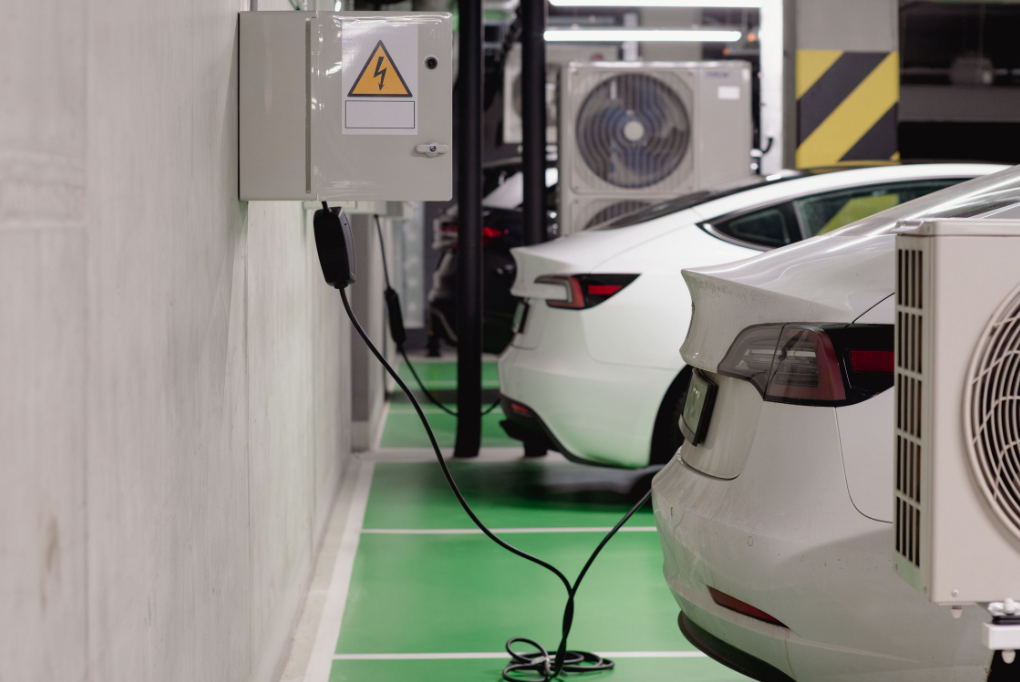
Image Credit: Pexels
For non-residential developments, including shopping complexes, malls, hotels and office buildings with parking for at least 10 cars, developers will be required to provide one EV charging spot for every three parking spaces. These buildings must also be fully EV-ready to accommodate future charging requirements.
The government said that EV charging infrastructure will be exempt from Floor Area Ratio (FAR) calculations to encourage developers to install charging facilities without affecting permissible built-up area.
The amendment allows charging stations to be installed in basements and stilt parking areas, provided they meet fire and electrical safety requirements certified by the Fire Department. Developers will also be required to disclose the allocation of EV charging spots while applying for an Occupation Certificate.
The order further states that residents in existing buildings may install EV charging infrastructure in their designated parking spaces, subject to compliance with electrical and fire safety standards certified by both the Fire Department and the concerned electricity distribution company (DISCOM).
The Haryana government has asked the Fire and Emergency Services Department to prepare comprehensive safety guidelines for EV charging facilities in consultation with the electricity department and Haryana Vidyut Prasaran Nigam Limited (HVPNL).
Also Read: Cabinet Approves ₹9,585 Crore Scheme to Replace Old Trucks and Buses, Boost EV Adoption in Delhi-NCR