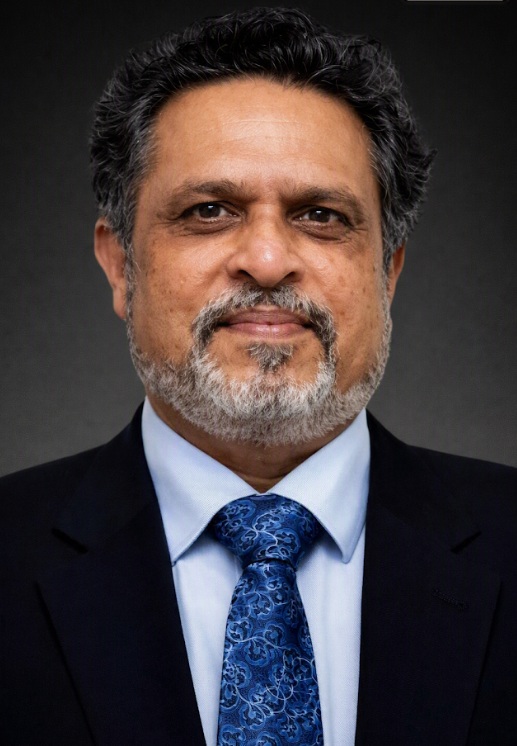

Vatsal Kundalia, Managing Director of Advait Greenergy, is part of a new cohort of entrepreneurs building businesses around India’s fast-changing energy ecosystem. Believing the global energy transition is still in its early stages, he sees a unique opportunity for young leaders to create companies inherently aligned with sustainability. Under his leadership, Advait Greenergy is expanding its presence in the renewable and green energy ecosystem. In this interview with Enersider, Kundalia shares the company’s growth plans and his vision for contributing to India’s energy transition.
The following are the edited excerpts from the interview:
Q: You commissioned microgrid projects in 2024. Are there more such projects in the pipeline? What can you tell us about your plans in this space?
A: In 2024, we commissioned one of India’s early green-hydrogen-based microgrid systems for a public sector utility in Rishikesh. The system integrates a 300 kW alkaline electrolyser with hydrogen storage and fuel-cell-based power generation, creating a closed-loop clean energy microgrid capable of producing roughly 50 kg of high-purity hydrogen per day for power generation and mobility applications. Additionally, we are set to commission a 1 MW Green Hydrogen generation plant for industrial use at KP Green Engineering’s Matar plant.
These projects have served as a technology demonstrator for decentralised energy systems combining renewables, hydrogen production, storage, and dispatchable power.
Following the success of this deployment, we are currently evaluating a few microgrid-scale and industrial hydrogen projects in the 0.5 MW–5 MW range, particularly for remote industrial clusters, defense establishments, and public utilities.
India’s push under the National Green Hydrogen Mission, targeting 5 million tonnes of green hydrogen annually by 2030, creates a strong opportunity for decentralised hydrogen microgrids to support industrial decarbonisation and grid resilience. We expect several pilot-to-commercial microgrid projects to move forward over the next 24–36 months, particularly in industrial and utility-linked applications.
Q: Your company operates across emerging segments like green hydrogen and battery energy storage. Could you share details of the projects currently under execution and their expected timelines?
A: Our portfolio today spans solar EPC, green hydrogen infrastructure, and battery energy storage systems (BESS), reflecting a broader strategy to build integrated clean-energy infrastructure.
Some of the key projects currently under execution include:
- Battery Energy Storage Systems (BESS):
We are executing large-scale grid-connected BESS projects, including a 50 MW / 100 MWh battery storage installation in Gujarat, with completion targeted by June 2026 and commissioning shortly thereafter. Additionally, we have begun execution of our second L1 position for 300 MWh BESS project awarded by Gujarat Urja Vikas Nigam Ltd. under a long-term concession model, marking our commitment into utility-scale storage infrastructure. - Green Hydrogen Projects:
We have executed a 1 MW green hydrogen plant in Gujarat, along with hydrogen production and balance-of-plant infrastructure. Further hydrogen EPC discussions are under development with industrial partners in western India. - Solar EPC Projects:
We currently have over 150+ MW of solar EPC capacity under implementation, including large ground-mounted plants in Gujarat.
Overall, across hydrogen, storage, and solar, our execution pipeline exceeds 500 MW of renewable and storage infrastructure combined, with most projects expected to be completed between FY 2026 and FY 2027.
Q: What are your capex plans for FY’26-27?
A: Our capex strategy for FY 2026-27 is focused on manufacturing, storage infrastructure, and hydrogen technologies.
The most significant component is our investment in electrolyser manufacturing and clean-energy infrastructure, where we have committed significant investments in Gujarat covering BESS manufacturing, electrolyser manufacturing, fuel-cell technologies, and renewable EPC infrastructure.
Some Key Capex Priorities include –
- Expansion of alkaline electrolyser assembly and manufacturing capacity
- Development of battery energy storage manufacturing and integration capabilities
- Strengthening EPC execution capacity across solar, hydrogen, and storage
This investment program will allow us to build large-scale domestic manufacturing capability and supply-chain localisation, aligned with the Government of India’s energy transition roadmap.
Q: What are your funding-raising plans for FY’26-27?
A: Our funding strategy for FY 2026-27 is structured around a balanced mix of internal accruals, strategic partnerships, and fundraising.
Given the capital-intensive nature of energy infrastructure, we are focusing on:
- Project-level financing for large EPC and BESS deployments
- Strategic technology partnerships and joint ventures in hydrogen and storage
- Equity & structured capital aligned with manufacturing expansion
The objective is to maintain a disciplined balance sheet while scaling new businesses, particularly in green hydrogen manufacturing and grid-scale storage infrastructure.
Q: What is your vision for the company in the 10-year horizon?
A: Over the next decade, our ambition is to evolve into a fully integrated clean-energy infrastructure platform spanning manufacturing, EPC, and project development.
Our long-term vision includes:
- Building gigawatt-scale electrolyser manufacturing capability
- Establishing utility-scale battery energy storage infrastructure
- Delivering multi-gigawatt Solar + BESS projects across India and global markets
- Developing green hydrogen production and industrial decarbonisation projects
The broader objective is to position the company as a key infrastructure enabler of India’s energy transition, contributing to national goals such as 500 GW of renewable energy capacity and large-scale green hydrogen deployment by 2030.
We believe the next decade will see a convergence of renewables, hydrogen, and storage, and our strategy is aligned to operate across this integrated ecosystem.
Q: What are the advantages of being a young entrepreneur, and what is the flip side?
A: One of the biggest advantages of being a young entrepreneur in the energy sector today is timing. The global energy transition is still in its early stages, and young teams have the ability to build companies that are natively aligned with emerging technologies such as hydrogen, storage, and digitalised power infrastructure.
Young leadership also brings speed of decision-making, openness to innovation, and a higher tolerance for technology risk, which are critical in sectors where innovation cycles are accelerating.
The flip side, however, is that the energy sector is capital-intensive and credibility driven. Building trust with utilities, investors, and large industrial customers requires execution track record, financial discipline, and long-term reliability. Young entrepreneurs, therefore, have to work doubly hard to demonstrate operational capability and governance standards.
In many ways, the challenge itself becomes an advantage — because once credibility is established, the ability to combine innovation with disciplined execution can create very strong long-term institutions.