
New Delhi | 30 Jul 2026
The International Youth Day was observed globally for the first time on Aug 12, 2000. Since then, this day reminds us about the pivotal role young people play and how their inclusion ensures right partnerships for driving forward the development agenda. The idea of intergenerational foresight needs to jump out of the comfort of symbolic gestures. It needs to evolve across generations and boundaries. The youth of today need to be actively involved in co-creation and design of the world in which they will live in future. The current global youth population is approximately 1.3 billion, and this accounts for roughly 15.4% of the total world population. India outshines all other countries with a demographic dividend holding the largest youth population with over 65% of its citizens under 35 years of age. These mind-boggling numbers are further having a compounded impact with the proportion of young people higher in regions of Sub-Saharan Africa, Asia, and Pacific. These comprise the global South and have several commons, including and not restricted to, historical traits, economic standards, and geo-political status. Of the total burgeoning global population of 1.3 billion, the vast majority resides in countries with emerging economies. This demographic dividend needs to be involved in systemic practices that contribute towards the agenda of sustainable development through structural shifts and de-centralised frameworks.
It is important to note that youth have an important role to play in driving sustainable development. Having said that, their voice in discourses linked with environment, economies and social life need to be heard and prioritised. Youth Pulse 2026, the World Economic Forum’s flagship report on youth perspectives, identifies the priorities, perceptions and aspirations that will help societies complex transitions. A meaningful engagement through a systemic inclusion of youth voices to enhance economic opportunities, restore trust in governance and leadership, inclusive integration of AI technology and skills, social cohesion and environmental action to prompt stewardship are all the need of the hour. However, there are grey areas, that need redressal mechanisms. Prosperity of a nation cannot be measured only on account of Gross Domestic Product (GDP). Alternative indicators that track environmental damage, income inequality, and human well-being also needs to be accounted for. Sustainability, equity and quality of life are no longer buzz words. They actually serve as the foundation on which the theme of International Youth Day 2026 rests upon: ‘Different Contexts, Common Aspirations’. Here is a unique opportunity for governments, youth organizations, United Nations entities, civil society, academia, and other stakeholders to promote dialogue, strengthen partnerships, and showcase youth-led initiatives that contribute to more inclusive, peaceful, and sustainable societies. We therefore see a beacon of light in our youth citizens, as they need to optimise resilience, leadership, and innovation in advancing sustainable development within their communities and beyond.
The theme of the International Youth Day 2026 (Different Contexts, Common Aspirations)also resonates with the principles of environmental ethics, as it orients the younger generation for acceptance of generational wisdom of living in harmony with nature. Our nation’scommitment towards renewables, biodiversity, natural resources, climate action and Mission LiFE constantly encourage the citizens for a sustainable lifestyle. However, lasting changescan happen only when environmental values become a part of daily behaviour. This is where the role of young people is most important. By all measures, they are likely to live many years longer than us. They are not merely the citizens of tomorrow, but the CHANGEMAKERS of today. They have the energy, creativity, curiosity and the courage to challenge the status quo, and influence the society at large. A decentralised manner of promoting value education and intergenerational dialogues will create systemic nudges that will ultimately create pathways that the youth can following supporting sustainability principles and the vision of Viksit Bharat@2047. On International Youth Day 2026, let us acknowledge and support the fact that the future of our planet depends not only on governments, scientists, and policymakers, but also on the youth of today. In this context the choices that they make now and in future are closely linked with environmental sustainability. Across the world, we are witnessing the impacts of climate change, air pollution, water scarcity, biodiversity loss, waste generation, and unsustainable lifestyles. These are not distant problems. They affect our health, our economy, our food security, and our quality of life. While nature has an amazing capacity to heal itself, our sacred duty is to give it the chance. By protecting ecosystems, conserving resources, and making responsible choices, we can build a future that is cleaner, healthier, and more sustainable. This is possible if we follow the path of environmental ethics. Environmental ethics teaches us that every living being has value and that we have a moral responsibility to safeguard the Earth for future generations. A few actions that will uphold ethical commitments, include responsible consumption, conservation of natural resources, efficiency measures, reducing pollution, respect for all forms of life, and promoting environmental justice. Wise use of technology is also an important aspect as it gives youth an opportunity for green entrepreneurship. As young entrepreneurs, they have designed solutions like Kabadiwala and Phool.co. These and many other similar examples highlight an importance of enhancing environmental literacy as the first step towards successful ecopreneurship models. This choice of action over indifference is an ethical approach and accounts for multiple quality traits like responsibility, stewardship and integrity.
The theme for 2026 edition, “Different Contexts, Common Aspirations,” is a timely reminder that while young people across the world experience different realities, they are united by a common desire and i.e. to inherit a planet that is environmentally secure, socially inclusive, and economically resilient. Whether they are students in remote villages, researchers in universities, young entrepreneurs, or community leaders, today’s youth are not merely beneficiaries of sustainable development; they are its architects. A critical need always remains in ways we shape their mindsets so that they are not only prepared for adapting to the unprecedented changes but design solutions to mitigate the far-reaching consequences. Therefore, it is crucial to understand the evolution of environment education over the last five decades that reflects a profound shift in global thinking towards imparting knowledge and youth development.
Box Content (above)
The evolution of environment education signifies an important transition—from ‘educating about the environment’ to ‘educating for sustainability’. The objective today is not simply to increase awareness but to cultivate competencies that enable individuals to anticipate future challenges, think systemically, collaborate across disciplines, innovate responsibly, and act with empathy and purpose. Complementing this vision is Global Citizenship Education (GCED), which prepares learners to understand the interconnectedness of societies and ecosystems while nurturing values of peace, inclusion, equity and shared responsibility. Together, ESD and GCED represent the educational foundation that can be imparted to citizens who can navigate complexity and contribute meaningfully to local, national and global action on sustainable development. India has embraced this transformative vision through the National Education Policy (NEP) 2020 that advocates experiential, multidisciplinary and competency-based learning, thus preparing learners for the challenges of the twenty-first century. Another national campaign, Mission LiFE (Lifestyle for Environment) has positioned every individual as a catalyst for sustainable lifestyles and collective action and placed behavioral change at the center of climate action. This philosophy also resonates strongly with the national aspiration of Viksit Bharat 2047. Building a developed India is not solely about economic growth or technological advancement; it equally depends upon developing environmentally conscious, socially responsible and globally competent citizens.
For over five decades, TERI has anticipated this evolution by placing environment education at the center of sustainable development. Long before climate change education became a global priority, TERI recognised that empowering young people through knowledge, values and action would be essential for building resilient societies. Its programmes have consistently evolved alongside international frameworks while responding to India’s changing developmental priorities. Against this rationale, TERI’s GREEN Olympiad stands as a perfect example, now completing twenty-seven years as India’s pioneering environmental examination. Conceived at a time when environmental education occupied limited space within formal education, GREEN Olympiad transformed learning by encouraging students to explore environmental issues through curiosity, critical thinking and real-world application rather than rote learning.
Over nearly three decades, GREEN Olympiad has reached millions of learners across thousands of schools, becoming one of India’s largest environmental education movements. More significantly, the programme has continually adapted to emerging priorities. Its content today reflects contemporary issues including climate resilience, biodiversity conservation, circular economy, resource efficiency, sustainable consumption, environmental governance and the Sustainable Development Goals. The programme aligns with Mission LiFE and complements the aspirations of NEP 2020 by promoting inquiry, experiential learning and interdisciplinary thinking.
Recognising that sustainability education must extend across all age bandwidth, TERI has successfully expanded GREEN Olympiad into higher education institutions on its 20thanniversary in 2020. This transition from schools to colleges reflects an important shift—from building environmental awareness among children to preparing future professionals and decision-makers capable of integrating sustainability into research, business, governance, technology and public policy. The college programme encourages learning by solving case studies bringing in innovation, critical inquiry and solution-oriented thinking. Thus, equipping youth to address complex sustainability challenges through interdisciplinary lens.Over the years, our interaction with children and youth alike have made us realize how different learners require different pathways. A primary school student may begin with curiosity by noticing different colours in nature; a secondary school learner may explore environment through problem-solving and quizzing; a university student may understand through an experiment and develop sustainable innovations; while young professionals may lead climate action within institutions and communities. Though their contexts differ, their aspirations converge with creating ideas with knowledge, becoming resilient and seeking opportunities that lead to healthier ecosystems and sustainable living.
On this International Youth Day, the message is both simple yet thought provoking. Young people in India represent different geographies, cultures and socio-economic realities, but they share common aspirations for dignity, opportunity and a sustainable future. By investing in transformative education and creating opportunities for meaningful participation, we can demonstrate how environment education can evolve into sustainability leadership and contributing to the larger national vision of a developed, resilient and sustainable India by 2047. The youth of today occupy a centre stage for localized, grassroots action. Intergenerational dialogues will further strengthen the judicious mix of age-old wisdom and the contemporary practices around sustainability science, community led power, circular economies and advocacy opportunities.
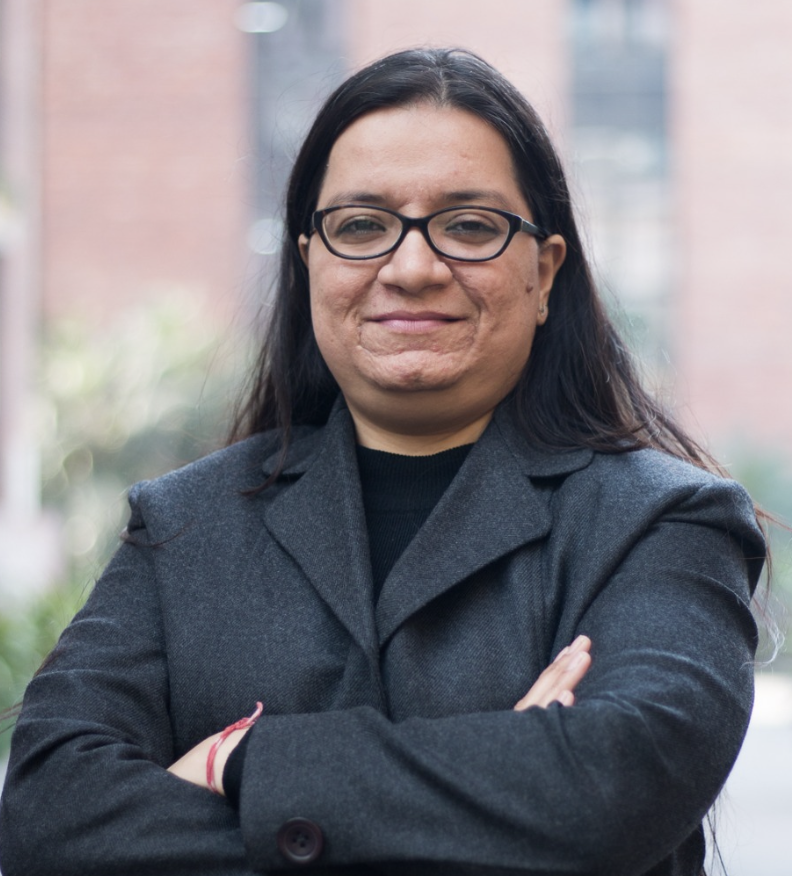
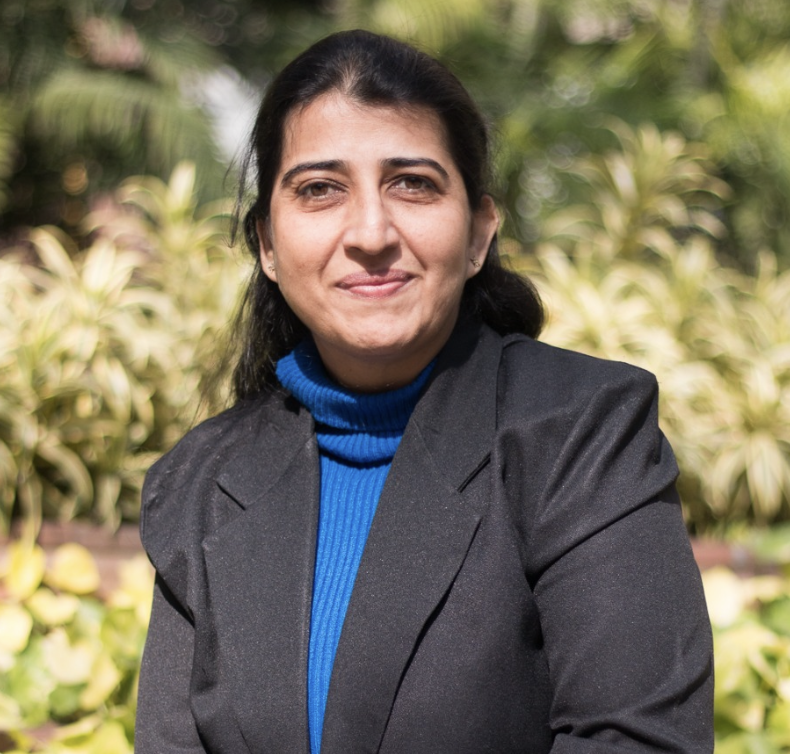
Authored By: Dr Livleen K. Kahlon, Director, Environment Education and Awareness, TERI (first author), and Ms Taru Mehta, Associate Director, Environment Education and Awareness, TERI