GUEST ARTICLE · ENERSIDER MEDIA · JUNE 2026
The Prime Minister’s appeal placed EV adoption inside India’s response to the oil-import shock. Three weeks on, pump prices are moving. The next month belongs to buyers who can compute their own total cost.
By Dr. Rahul Walawalkar, Founder, Walawalkar Enterprise LLP (WE LLP)
Dr. Walawalkar is also the Founder & President of NETRA, the NetZero Energy Transition Association, an industry body working on global net-zero technology commercialisation. Views in this article are his own and represent WE LLP analysis.
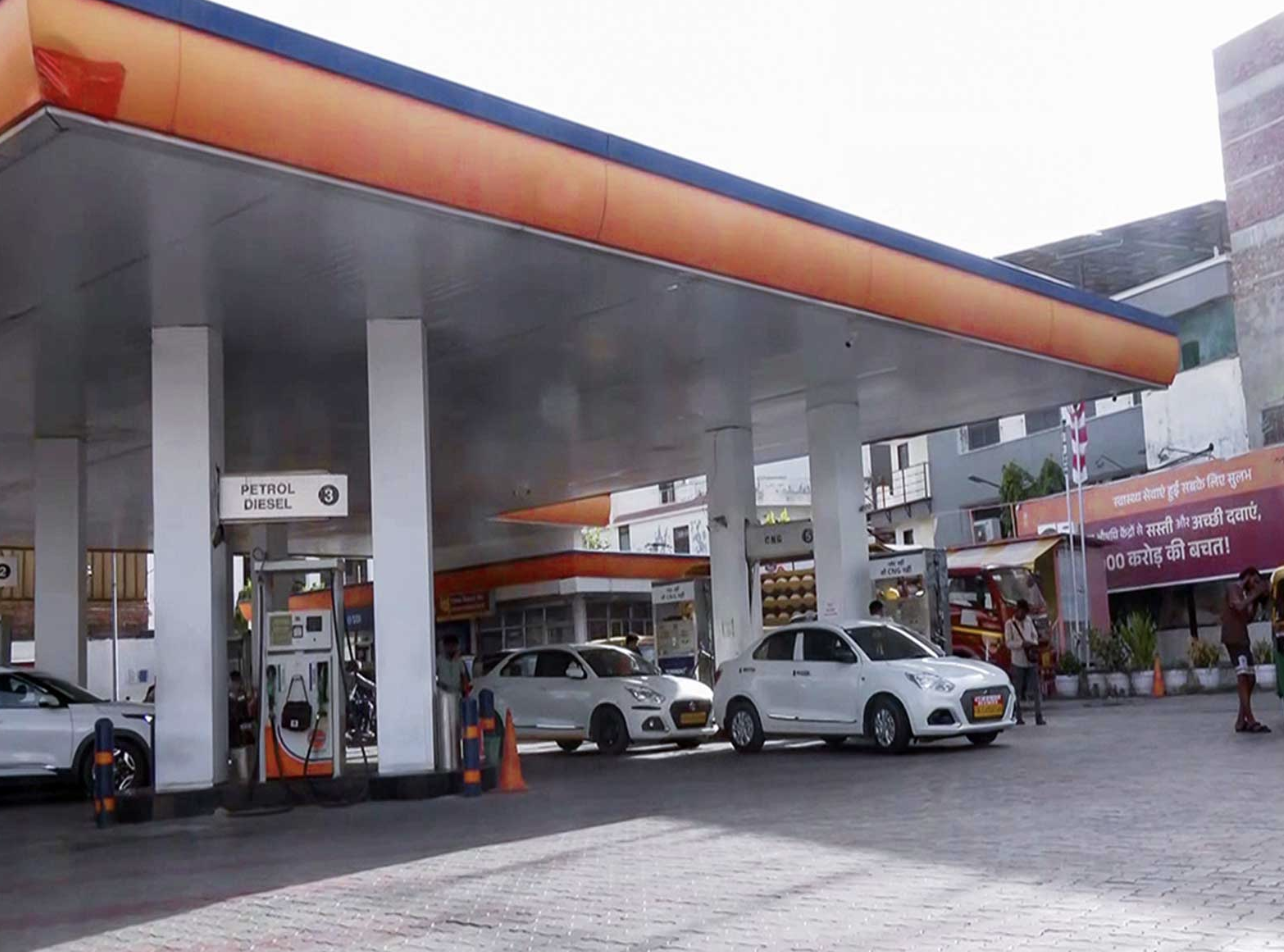
Petrol prices across major Indian cities began rising through May 2026 after months of stability. Oil marketing companies are reportedly absorbing close to ₹30,000 crore in cumulative under-recovery, with a formal four-to-five rupee per litre adjustment now anticipated within weeks. Three weeks ago, when Prime Minister Modi spoke at Vadodara on 12 May, retail pump prices were still cushioned. They are no longer. The Indian consumer who told themselves a month ago that they would “wait and see” on electric mobility has already started paying for the wait — quietly, every time they tank up.
This is the small but consequential shift that has happened since the Prime Minister’s appeal to citizens to reduce petrol and diesel consumption, use public transport, carpool, and embrace maximum adoption of electric vehicles, as part of India’s response to what he described as one of the worst crises of the decade. The Middle East crisis has impacted crude markets in ways that were always likely but rarely calculated by ordinary buyers. Brent crude peaked at around 126 dollars in late April, and even after some retreat to the mid-90s as of early June, prices remain nearly 50 per cent higher than a year ago. The Strait of Hormuz, through which roughly a fifth of global oil and LNG shipments pass, continues to operate under strain.
For India, the structural arithmetic does not move. We import 88 per cent of the crude we consume, according to the Petroleum Planning and Analysis Cell. Every dollar of sustained crude elevation is paid for somewhere — by oil marketing companies absorbing under-recovery, by the exchequer reducing excise, by the consumer at the pump, or by all three. The Prime Minister’s appeal was, among other things, an honest message that the government can absorb only so much, and that citizens are now part of the response.
That brings us to the question that should be on every Indian household’s table: if the country is asking citizens to reduce petrol and diesel consumption, what does that ask actually look like in practice?
The answer is more interesting than the headline suggests. India’s electric mobility story is not one story. It is two.
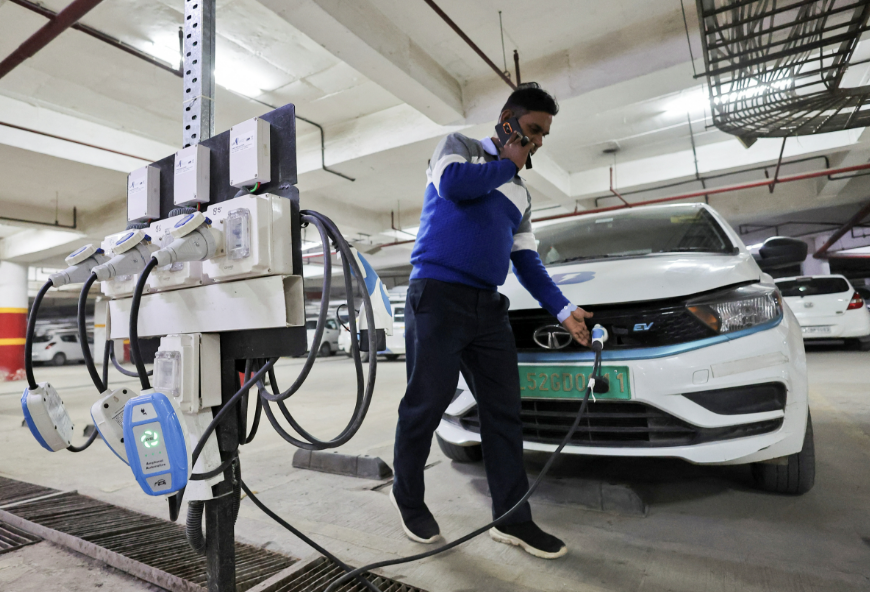
The first story is essentially won. Electric three-wheelers have crossed 60 per cent of new registrations in cargo and last-mile passenger transit. Electric two-wheelers grew 22 per cent in FY25-26 to 1.4 million units — they now make up 57 per cent of all electric vehicles sold in India, on Vahan portal data. Electric goods carriers were up roughly 170 per cent year-on-year. These segments have crossed the economic crossover point. The transition is consumer-led, not subsidy-led, and continued growing through the September 2025 GST 2.0 reform that actually narrowed the price gap between EVs and small petrol vehicles.
The second story has stalled. Electric four-wheelers in the passenger car segment grew 91 per cent in FY25-26, but off a small base. They account for around 1.9 lakh units, or roughly 4.25 per cent of car sales. Strong hybrids, in the same segment, are at 8.21 per cent — outselling pure EVs almost two-to-one. Small commercial vehicles, despite the central PM E-DRIVE incentive of up to 9.6 lakh rupees per electric truck, are barely making a dent in the diesel fleet.
The instinct is to explain this stall with the familiar list. Charging infrastructure is thin. Products are too expensive. Range is inadequate. Resale value is uncertain. Each of these is partially true. None of them is the binding constraint anymore.
The binding constraint, for the Indian car buyer in 2026, is decision support. It is the absence of an honest, personalised answer to the question: given my city, my electricity tariff, my actual driving pattern, and the incentives that actually apply to me, what does the next ten years of vehicle ownership cost — petrol versus diesel versus hybrid versus electric?
This is not a small gap. The September 2025 GST 2.0 reform cut small petrol cars from roughly 29 per cent effective tax to 18 per cent, while keeping EVs at 5 per cent. The upfront price gap narrowed materially. Whether an EV still wins on lifetime cost now depends entirely on inputs that vary buyer to buyer — electricity tariff, daily mileage, home versus public charging mix, state road tax and registration waivers, resale assumptions. There is no single answer. There is no “EVs are cheaper” or “EVs are more expensive” verdict that holds across India.
Personally, I find this both the opportunity and the failure of the Indian EV conversation. We have spent five years debating averages — average TCO, average charging cost, average payback. The Indian consumer does not live in averages. They live in a specific city with a specific electricity slab and a specific daily commute. We have not built the analytical infrastructure that lets them answer the question that actually matters. Not “is the EV cheaper in general?” but “is it cheaper for me?”
This is the gap that WE LLP launched Watt2Buy.org in public beta on 22 May 2026 to address. (Disclosure: I am its founder.) The platform computes a personalised total cost of ownership across all major powertrains — electric, strong-hybrid, petrol, diesel and CNG — anchored in the inputs that actually vary buyer to buyer: city, electricity tariff, daily mileage, charging mix, and the incentives that genuinely apply. The output is honest. A high-tariff metro buyer with low daily mileage may see a hybrid beat an EV. A high-mileage buyer in a state with strong road-tax relief will see the opposite. The platform does not default to “EVs are cheaper.” It tells the consumer when they are, and when they are not.
Watt2Buy is one instance of a category that India now needs at scale. Other tools exist — Vahan publishes registration trend data, CEEW publishes serious adoption research, several OEMs offer narrower calculators tied to their own products. What India has not yet built, but plainly requires, is a layer of independent, source-cited, personalised decision support that consumers can use to act on the Prime Minister’s appeal without having to take anyone’s word for the economics.
What does this mean for the next quarter?
For the consumer in a city where pump prices have already moved, the question is no longer whether to consider an EV. It is whether the EV — or, honestly, the hybrid — that fits their specific use case already exists at a total cost of ownership that beats their current vehicle. For most urban commuters in two-wheeler distance, and for many cargo three-wheeler operators, the answer has been yes for some time. For the passenger car buyer, the answer is now “it depends on you” — and the tools to compute that “depends” are, finally, emerging.
For OEMs, the next twelve months will reward transparency more than marketing. The buyer who can model their own ten-year cost is a buyer who can be won on real economics. The buyer who is told to trust a headline range will increasingly be the buyer who walks away.
For policymakers, the obvious extension of PM E-DRIVE, GST 2.0, and the various state EV policies is recognition that consumer-side analytical capability is now strategic infrastructure — comparable to charging networks, comparable to manufacturing capacity. The fastest way to act on the Prime Minister’s appeal is not to launch another scheme. It is to make sure that every Indian household considering its next vehicle can run honest numbers for itself, in fifteen minutes, in its own city.
■ ■ ■
The crude price will move. The Middle East situation will resolve, or it will not. India’s import dependency will fall, or it will not fall fast enough. What we control, here, this quarter, is whether the household making its next vehicle decision has the tools to make it well. That is a smaller question than oil sovereignty, and a larger question than any single product launch. It is also the question that is most directly in our hands.
ABOUT WALAWALKAR ENTERPRISE LLP
Walawalkar Enterprise LLP (WE LLP) is a strategic advisory firm focused on clean energy, sustainable mobility, and net-zero industrial transitions. WE LLP works with corporates, investors, governments, and multilaterals on commercialisation strategy, market entry, regulatory positioning, and consumer-side adoption acceleration. Watt2Buy.org, launched in public beta on 22 May 2026, is a WE LLP initiative.
Authored By:
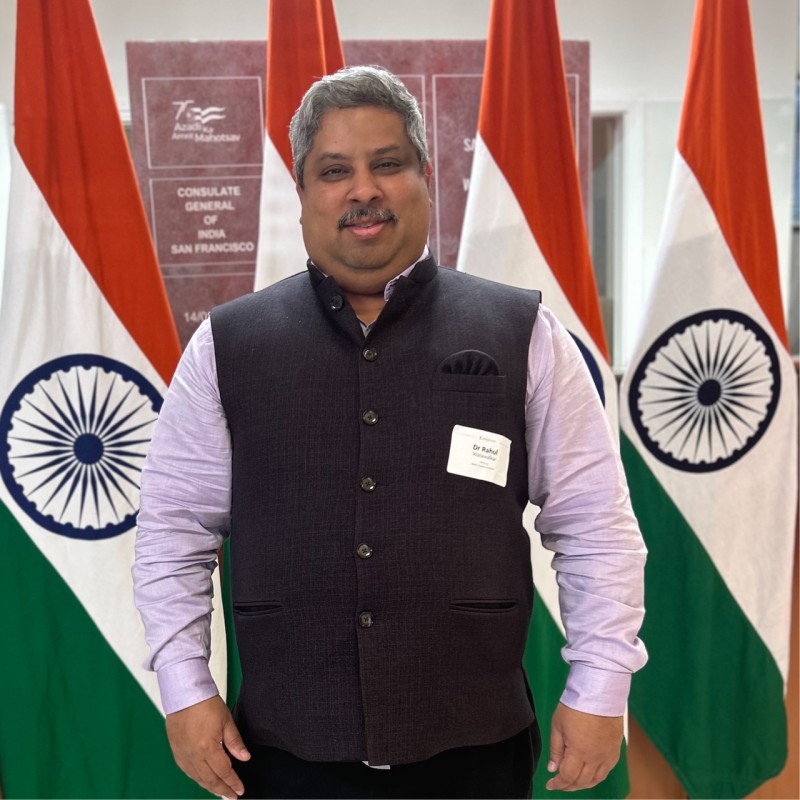
Rahul Walawalkar