
By Enersider Desk | New Delhi
Central Transmission Utility of India Ltd (CTUIL) has revoked connectivity of 24 entities, having renewable energy (RE) capacity of 6,343 MW, since 2022, an official statement said, adding that the information was shared by the Minister of State for Power, Shripad Yesso Naik, in a written reply in the Rajya Sabha.
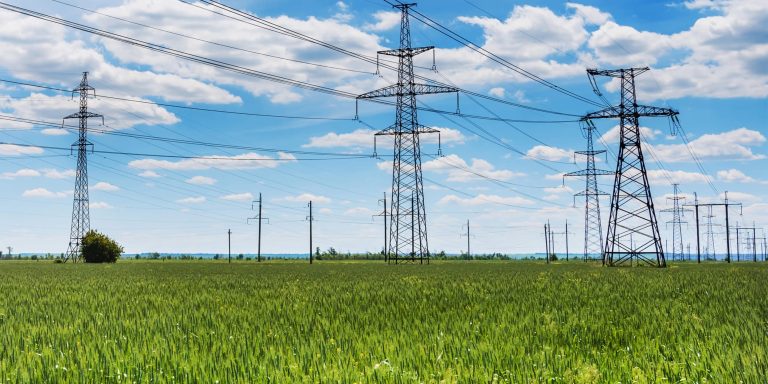
It was noted that the cancellations are on account of developer delays and not due to transmission side delays.
There are sixteen petitions pending before the Central Electricity Regulatory Commission that have approached CERC seeking protection from revocation of Connectivity.
The revocation of grid access permissions is not due to shortfall in transmission planning for achieving the 2030 non-fossil capacity target.
The Union Government has set a goal of 500 GW of non-fossil fuel-based generation capacity by 2030 out of which 259 GW of non-fossil capacity is connected to the grid.
Further, Inter-State Transmission System (ISTS) for evacuation of 172 GW of renewable energy is already under construction, and bids are in process for 19 GW capacity.
Simultaneously, the Government is working with the States to ensure timely development of respective Intra-State Transmission Systems for evacuation of 152 GW of renewable energy.
According to the statement, these efforts, together with the planned transmission systems for integrating hydro, nuclear, and other non-fossil capacities, collectively provide a clear implementation plan for achieving the 500 GW non-fossil capacity target.
The Central Transmission Utility (CTU) is an important facet of the electricity transmission sector.
The Electricity Act, 2003, the legislation which determines the governance of the electricity sector in India, has allocated various important functions to the CTU.
Among others, these functions include: (a) undertaking transmission of electricity through the inter-state transmission network, (b) planning the inter-state transmission network and coordination with other key stakeholders, (c) development of inter-state transmission lines for smooth flow of electricity to the load centers and d) provide open access connectivity.
Importantly, the CTU collects tariffs from utilities in the form of inter-state transmission charges on account of usage of the transmission infrastructure.
Also Read: India Achieves Record Clean Energy Expansion; Odisha to Get 1.5 Lakh Rooftop Solar Systems